
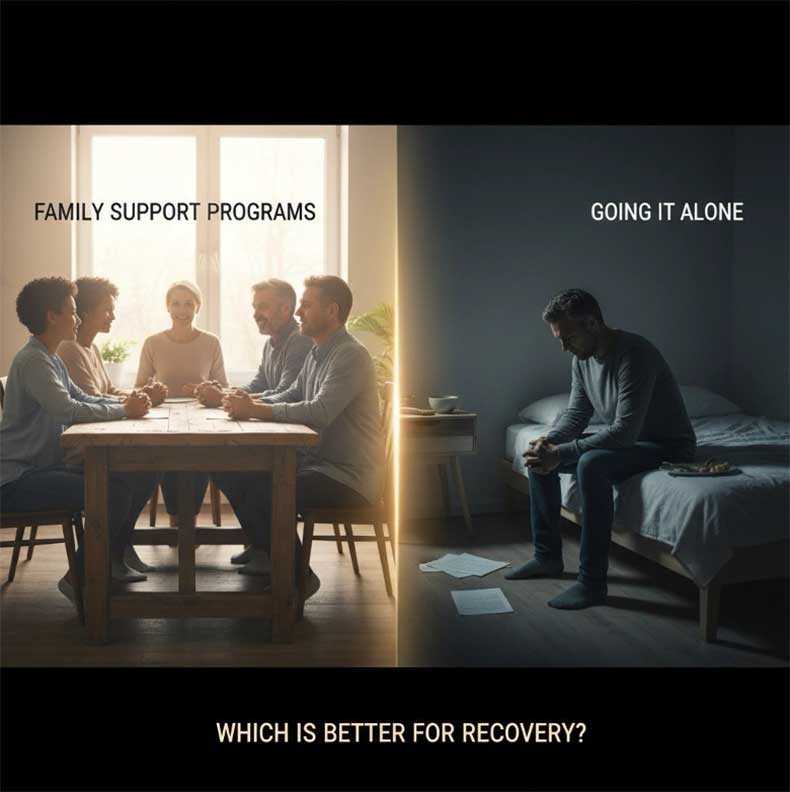
For over 50 years, Livengrin Foundation has guided thousands of families through the complex journey of addiction recovery across Pennsylvania. We’ve witnessed firsthand how family dynamics can either fuel recovery or inadvertently sabotage it. Today, we’re addressing one of the most pressing questions families ask us: Should your loved one tackle recovery with family support programs, or is going it alone the better path?
The answer might surprise you. Research consistently shows that individuals with active family involvement are up to 40% more likely to maintain long-term sobriety compared to those attempting recovery in isolation. But let’s dive deeper into why this matters for your family’s specific situation.
Why Addiction Is Never a Solo Journey
 When addiction takes hold, it doesn’t just affect the person using substances: it ripples through entire family systems. You’ve likely experienced the stress, financial strain, broken trust, and emotional exhaustion that comes with loving someone struggling with addiction. These aren’t side effects; they’re integral parts of how substance use disorder operates within families.
Understanding this reality is crucial because it reveals why recovery approaches that ignore family dynamics often fall short. Addiction thrives in isolation, shame, and disconnection. Sustainable recovery requires rebuilding the very relationships and trust that addiction has damaged.
The Power of Family Support Addiction Programs
What Makes These Programs Different
Family support programs recognize that healing happens within relationships, not despite them. These programs actively involve spouses, children, parents, and close friends in the treatment process alongside professional clinical care.
Unlike traditional individual therapy, family-centered approaches address the reality that your loved one will return to the same environment where their addiction developed. Without changing family dynamics and communication patterns, even the most motivated individuals struggle to maintain sobriety when they encounter the same triggers and stressors at home.
Documented Results That Matter
The evidence supporting family involvement is compelling:
- Treatment retention improves significantly when families participate actively in the recovery process
- Relapse rates drop substantially because family members learn to recognize early warning signs and respond effectively
- Heavy substance use, drug-related arrests, legal problems, and hospitalizations all decrease when families engage in structured support programs
- Cost-effectiveness reaches $5 in societal savings for every dollar spent on family-based treatment
These aren’t just statistics: they represent real families who’ve rebuilt trust, communication, and hope together.
Core Components of Effective Family Programs
Quality family support programs include several key elements:
Family Therapy and Counseling: Professional therapists work with your entire family unit to identify dysfunctional patterns, improve communication, and process the emotions surrounding addiction. This isn’t about blame; it’s about understanding how family dynamics can support or undermine recovery efforts.
Psycho-Educational Workshops: You’ll learn practical skills like distinguishing between support and enabling, recognizing triggers in your home environment, and developing healthy boundaries that protect both your loved one’s recovery and your own wellbeing.
Family Support Groups: Connecting with other families navigating similar challenges reduces isolation and provides proven strategies from those who’ve walked this path successfully.
Relapse Prevention Planning: Your family becomes part of the accountability system, learning how to respond constructively when warning signs appear rather than reacting from fear or frustration.

The Reality of Going It Alone
Why Individual Recovery Without Family Support Struggles
When someone attempts recovery without family involvement, they’re fighting an uphill battle against isolation: one of addiction’s most powerful allies. Recovery requires extraordinary emotional resilience, and carrying this burden alone intensifies the shame and disconnection that often contributed to the addiction in the first place.
Without family members providing daily encouragement, accountability, and perspective, individuals rely solely on periodic professional support. While clinical treatment is essential, it cannot replicate the continuous, real-world support that family provides during vulnerable moments.
The Hidden Challenges
Solo recovery approaches face several significant obstacles:
Lack of Environmental Change: Returning to the same home environment without addressing family dynamics means triggers and stressful patterns remain unchanged.
Missed Early Warning Signs: Family members who understand addiction’s complexity are often the first to notice subtle changes that might indicate relapse risk. Going solo means missing these crucial early interventions.
Limited Accountability: Professional appointments provide structured accountability, but recovery happens in the spaces between sessions. Family members can provide ongoing, gentle accountability that reinforces commitment to recovery goals.
Emotional Isolation: The loneliness that often accompanies addiction can persist throughout solo recovery, making it harder to build the social connections essential for long-term sobriety.
Direct Comparison: Family Support vs. Solo Recovery

Making the Right Choice for Your Family
When Family Support Programs Are Essential
If your loved one has family members willing to participate actively in recovery, professional recommendation is clear: embrace structured family programs. The combination of individual treatment plus engaged family support creates synergy that dramatically improves outcomes.
This approach is particularly crucial when:
- Family relationships have been severely strained by addiction
- Multiple family members have been affected by the addiction
- Your loved one has experienced previous relapses
- There are children in the household who need support and education
When Family Resources Are Limited
Some individuals don’t have traditional family support available. In these cases, consider creating a “chosen family” of close friends, mentors, or sponsors who can fulfill supportive roles. Support groups and community resources can provide the accountability and encouragement that compensate for limited biological family involvement.
Addressing Unhealthy Family Dynamics
Sometimes families worry that their own dysfunction might harm rather than help recovery efforts. This is where professional family therapy becomes essential. Treatment centers can help families learn healthy support strategies and communication techniques before dysfunctional patterns undermine recovery progress.
The goal isn’t perfect families: it’s functional families who can support recovery while maintaining healthy boundaries.

Your Next Steps Forward
The evidence is clear: recovery supported by an engaged, educated family dramatically increases the likelihood of success and long-term sobriety. Individual determination matters enormously, but it shouldn’t carry the entire burden alone.
Taking Action Today
If you’re ready to explore family support options, consider these immediate steps:
- Reach out to treatment professionals who specialize in family-centered approaches
- Attend family education sessions to understand how addiction affects family systems
- Connect with other families in recovery through support groups
- Assess your home environment for triggers and stressors that need addressing
Getting Professional Guidance
At Livengrin Foundation, our family support specialists work with families throughout the recovery process. We help you understand how to support without enabling, how to set healthy boundaries, and how to rebuild trust gradually.
Recovery isn’t a sprint: it’s a marathon that’s run more successfully with a supportive team. Your family can be your loved one’s greatest asset in building a life of sustained sobriety, but only when equipped with the right knowledge and professional support.
Contact our admissions team to discuss how family support programs can strengthen your loved one’s recovery journey. Because when families heal together, recovery becomes not just possible, but sustainable.