
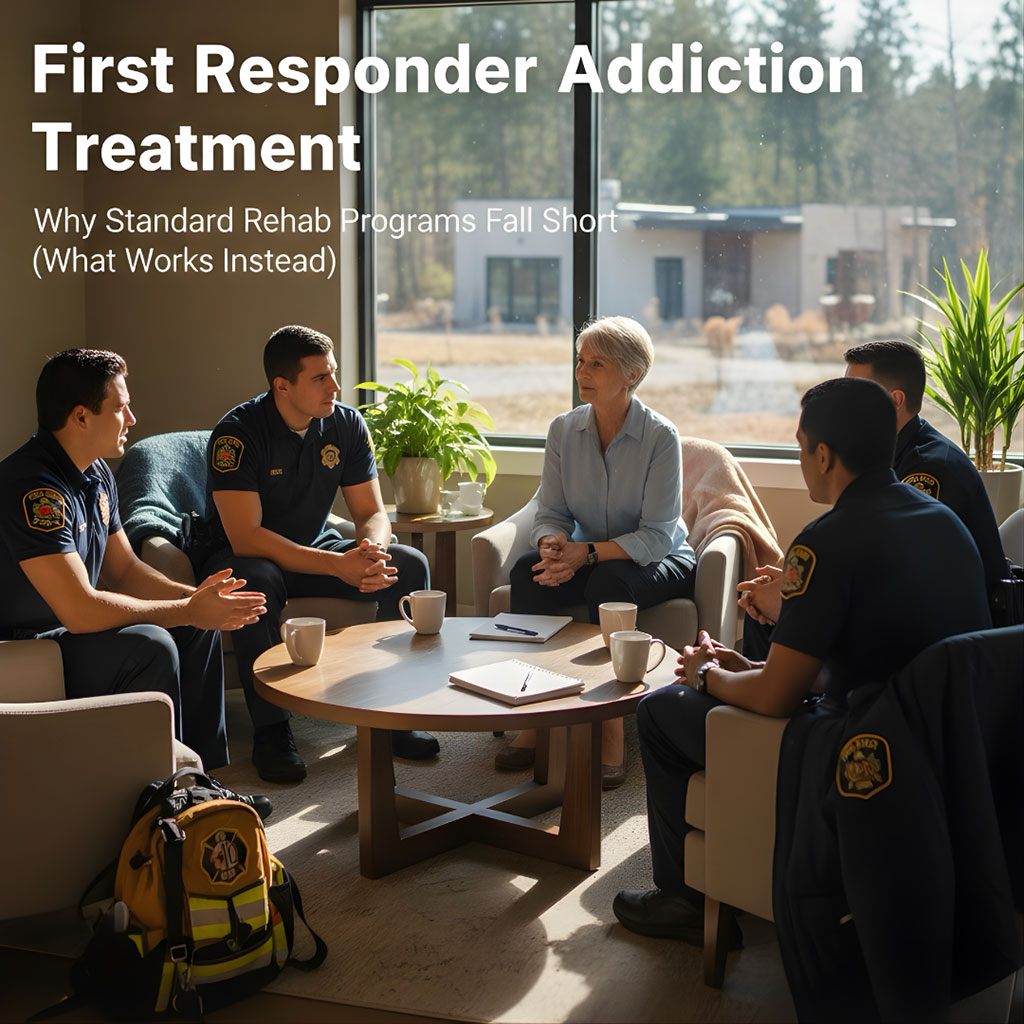
For over five decades, Livengrin Foundation has served communities across Pennsylvania and beyond, understanding that addiction doesn’t discriminate: but it does impact different people in differ-ent ways. When it comes to first responders, we’ve learned that the same heroes who dedicate their lives to protecting others face unique challenges that traditional addiction treatment centers simply weren’t designed to address.
If you’re a first responder struggling with substance use, or if you’re a family member watching some-one you love in uniform battle addiction, you’re not alone. The statistics are sobering: firefighters are more likely to die by suicide than in the line of duty, and police officers have higher rates of alcohol abuse than the general population. But here’s what matters most: recovery is absolutely possible when you have the right support system.
Why First Responders Face Different Addiction Challenges
The Weight of What You See
 Every day, first responders witness trauma that most people will never experience. Police officers ar-rive at crime scenes involving children. Firefighters pull victims from burning buildings. EMTs perform
CPR on teenagers who’ve overdosed. This isn’t just stress: it’s repeated exposure to human suffering that can fundamentally change how your brain processes emotions and memories.
What clinicians call “moral injury” happens when you’re forced to witness or participate in events that challenge your deepest beliefs about right and wrong. For first responders, this might mean watching a child die despite your best efforts, or being unable to save everyone in a multi-car accident. These experiences accumulate over time, creating psychological wounds that many try to numb through alcohol or prescription medications.
The Culture of “Just Push Through”
The same mental toughness that makes you effective in crisis situations can become a barrier to get-ting help. First responder culture often emphasizes stoicism, self-reliance, and never showing weak-ness. Asking for help can feel like admitting failure: not just to yourself, but to your team, your family, and the community you serve.
Many first responders also fear the professional consequences of seeking addiction treatment. Will you lose your job? Your security clearance? Your standing with fellow officers or firefighters? These aren’t unreasonable concerns: they reflect real systemic issues within many departments and agencies.
Physical Pain and Prescription Dependencies
Chronic injuries are common in first responder work. Back problems from wearing heavy gear, knee injuries from running in pursuit, shoulder damage from repeated physical demands: the list goes on.
When doctors prescribe opioids for legitimate pain, it’s easy for physical dependence to devel-op without you even realizing it’s happening.
What starts as following medical orders can gradually become something more concerning. You might find yourself taking an extra pill during particularly stressful shifts, or feeling anxious when your prescription runs low. This progression feels different from “typical” addiction because it often begins with legitimate medical treatment.
Where Traditional Rehab Programs Miss the Mark
One Size Doesn’t Fit All
Most addiction treatment centers use approaches developed for the general population. While these programs help many people, they often fail to address the specific trauma patterns, occupational stressors, and cultural factors that drive substance use among first responders. You might find your-self in group therapy with people whose life experiences feel completely foreign to your own.
Traditional programs typically focus on individual pathology: what’s “wrong” with the person seeking treatment. But for first responders, the issue is often situational. Your job requires you to see and do things that would traumatize most people. The problem isn’t that you’re weak; it’s that you’ve been repeatedly exposed to situations that exceed normal human coping capacity.
Missing the Peer Connection
 Recovery happens in relationship with others, but it’s hard to build meaningful connections with people who can’t relate to your experiences. When you’re sitting in a group with people who’ve nev-er worn a badge or responded to a fatal accident, it’s difficult to feel truly understood.
First responders often report feeling isolated in traditional treatment settings. Other patients might not understand why a “bad day at work” could involve holding a dying child or being shot at. This disconnect can actually reinforce the sense of isolation that often contributes to substance use in the first place.
What Actually Works: Specialized First Responder Programs
Trauma-Informed Care That Gets It
Effective first responder addiction treatment starts with clinicians who understand your world. These aren’t just addiction counselors: they’re specialists trained in occupational trauma, PTSD, moral injury, and the specific stressors of emergency service work.
Treatment might include therapies like EMDR (Eye Movement Desensitization and Reprocessing) for trauma memories, or Cognitive Behavioral Therapy tailored to address the hypervigilance and emotional numbing common among first responders. The goal isn’t just to stop using substances: it’s to heal the underlying wounds that made substances feel necessary in the first place.
Brothers and Sisters in Recovery
One of the most powerful aspects of specialized programs is being surrounded by people who get it. When you’re in group therapy with other police officers, firefighters, and EMTs, you don’t have to explain why certain calls stick with you or why you started drinking after particularly difficult shifts.
This peer support creates what many describe as an immediate sense of relief. You’re not the “bro-ken” one in a room full of “normal” people: you’re a person dealing with the natural consequences of an unnatural job, surrounded by others facing similar challenges.
Structure That Feels Familiar
 Many first responder programs incorporate the discipline and routine you’re used to in your professional life. Morning formations, physical training, clear expectations and accountability measures: these elements provide comfort and stability while you work on the difficult emotional aspects of recovery.
This structure isn’t about being rigid; it’s about creating an environment where you can focus on healing without feeling completely untethered from everything familiar.
Family and Organizational Support
Effective programs recognize that your recovery impacts: and is impacted by: your family and your department. Quality first responder addiction treatment includes family therapy, communication training, and sometimes coordination with command staff who want to support your recovery rather than punish your honesty.
Some programs offer education for spouses and partners about first responder culture, trauma responses, and how to support recovery without enabling. Others work directly with departments to create more supportive policies around mental health and substance abuse.
The Treatment Continuum: From Crisis to Long-Term Recovery
Medical Detoxification
If you’ve been using substances regularly, your body needs time to safely readjust. Medical detox provides 24/7 monitoring and support during withdrawal, ensuring your safety while managing un-comfortable symptoms. For first responders, this often means addressing not just alcohol or street drugs, but also prescription medications that may have been used appropriately initially.
Residential Treatment
The intensive phase typically happens in a residential setting where you’re removed from daily stressors and triggers. This isn’t about hiding from the world: it’s about creating space to learn new coping skills and process trauma without the constant demands of your job.
Days are structured around individual therapy, group sessions, trauma processing, physical fitness, and education about addiction and recovery. The goal is to address both the addiction itself and the underlying factors that contributed to substance use.
Stepped-Down Support
As you progress, treatment becomes less intensive but remains consistent. Partial hospitalization pro-grams allow you to return home at night while maintaining full-day therapeutic support. Intensive outpatient programs provide several hours of treatment per week while you begin reintegrating into work and family life.
Long-term recovery support is crucial. Many programs offer alumni groups, ongoing therapy options, and crisis support specifically designed for first responders facing the ongoing stressors of their careers.
Moving Forward: Recovery Is Possible
The addiction crisis among first responders is real, but so is recovery. Every day, police officers, fire-fighters, EMTs, and other emergency service workers get sober and build meaningful, sustain-able recovery while continuing to serve their communities.
Recovery doesn’t mean you’re no longer fit for duty: many first responders report being more effective, more present, and more resilient after addressing their substance use. The skills you learn in recovery: emotional regulation, stress management, healthy communication: often make you better at your job, not worse.
If you’re reading this and recognizing yourself in these words, know that seeking help is an act of courage, not weakness. Your community needs you healthy, your family needs you present, and you deserve to live free from the burden of addiction.
At Livengrin Foundation, we’ve had the privilege of walking alongside countless first responders on their recovery journeys. We know what works, and we know that with the right support, you can re-claim your life while continuing to serve others. Our specialized first responder program is designed specifically for people like you, by people who understand your world.
Recovery starts with a single phone call. You’ve spent your career helping others in their darkest moments. Now it’s time to let others help you find your way back to the light.