

When you realize a loved one needs help with addiction, the world often feels like it’s spinning out of control. Your first instinct is to find a solution: fast. You search for “detox rehab” or “addiction treatment centers” near you, and suddenly you’re met with hundreds of glossy websites, promising “luxury” amenities and 24-hour miracles.
In the Philadelphia, New Jersey, and Delaware regions, the options are overwhelming. Since 1966, Livengrin Foundation has stood as a pillar of stability in this community. We’ve seen the landscape change over 60 years, and we know that while a fancy website is easy to build, a legacy of clinical excellence and a true continuum of care take decades to perfect.
Choosing the right facility isn’t just about finding a bed; it’s about finding a partner in recovery. Here is a comprehensive guide to help you navigate the comparison between established centers and the newer “pop-up” facilities currently appearing across our region.
The Tri-State Landscape: Why History Matters
The Philadelphia metro area, including South Jersey and Northern Delaware, has unfortunately be-come a focal point of the national addiction crisis. In response, many for-profit “pop-up” rehabs have opened their doors. While some are well-intentioned, many lack the clinical infrastructure and long-term stability required for sustainable recovery.
At Livengrin, our history isn’t just a number: it’s a testament to thousands of families who have re-claimed their lives on our 44-acre campus. When comparing Philadelphia rehab centers, you should ask: Will this facility still be here in five years? Do they have deep roots in the local medical community?

1. Medical Detox: The Safety Standard
The first step in recovery is often the most dangerous. Medical detoxification is the process of safely clearing the body of substances while managing withdrawal symptoms.
When comparing facilities in PA, NJ, and DE, look for these specific safety markers:
- 24/7 On-Site Medical Supervision: Withdrawal from alcohol or benzodiazepines can be life-threatening. A reputable detox rehab must have medical professionals on-site at all times: not just on call.
- Evidence-Based Protocols: Ensure the center uses clinically proven methods to manage cravings and physical pain.
- Seamless Transition: The biggest risk for relapse occurs during the “gap” between detox and residential treatment. The best centers have these services in the same location to prevent a break in
2. The Full Continuum of Care vs. “Detox-Only”
Many newer facilities in our region are “boutique” centers that offer only detox or short-term residential stays. This is a red flag. Addiction is a chronic condition, and treating it in a 7-day vacuum rarely works.
A true “Skyscraper” facility: one that stands above the rest: offers a full continuum of care. This includes:
- Medical Detox: Stabilization and
- Residential Treatment: Intensive therapy in a structured
- PHP (Partial Hospitalization): A bridge between 24/7 care and returning
- Intensive Outpatient (IOP): Continued support while reintegrating into work and family
- Alumni Support: A lifelong
At Livengrin, we pride ourselves on meeting patients where they are. Whether someone is starting at day one or needs a “tune-up” after a setback, our continuum of care ensures they never have to navi-gate the transition alone.
3. Comparing the Environment: 44 Acres vs. A Strip Mall
The physical environment of a rehab center plays a significant role in the healing process. While “luxury” rehabs often highlight high-thread-count sheets and infinity pools, those amenities don’t treat the disease of addiction.
Instead, look for a restorative environment. Livengrin’s 44-acre campus in Bucks County provides something that many urban or “pop-up” centers cannot: space to breathe.
- Dignity in Design: Is the facility clean, professional, and conducive to reflection?
- Community Spaces: Recovery happens in connection with Look for centers that foster community through group settings and shared spaces.
- Access to Nature: Studies show that natural settings can reduce cortisol levels and improve mental health outcomes during early recovery.

4. Clinical Expertise and Specialized Tracks
Every individual’s journey is unique. A “one-size-fits-all” approach is a sign of an inexperienced facili-ty. When researching addiction treatment centers, look for specialized programs that address the unique stressors of different populations.
For example, Livengrin has pioneered specialized tracks such as:
- FRAT (First Responder Addiction Treatment): Tailored for police, fire, and EMS personnel who face unique trauma.
- Workforce Recovery: Helping professionals return to their careers with dignity and a
- Young Adult Programs: Addressing the specific developmental needs of those early in their jour
If a facility cannot explain how they individualize their treatment plans, they may not have the clinical depth required for complex cases.
5. Family Involvement: Is the Whole Family Healing?
Addiction is often called a “family disease,” yet many centers treat the patient in total isolation. When comparing rehabs in PA, NJ, and DE, ask about their family programs.
Do they offer:
- Weekly family education sessions?
- Family therapy?
- Support groups for loved ones?
We believe that for the patient to stay sober, the family dynamic must also shift. Providing families with the tools to set boundaries and support their loved ones without enabling is a cornerstone of what we do. We even host regular alumni and community meetings to keep families connected.

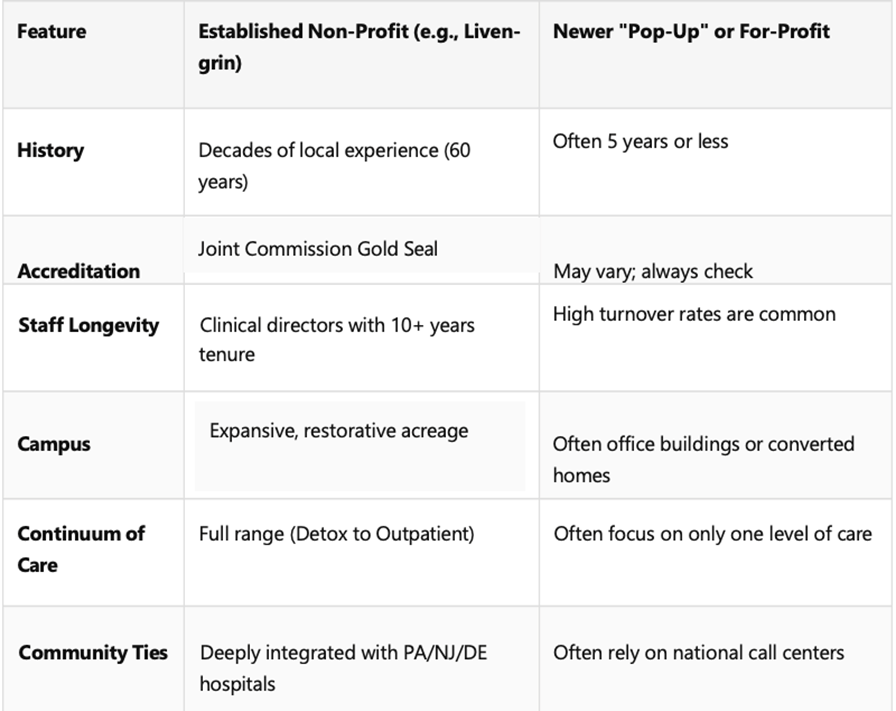
Comparison Checklist for Families
To make this easier, here is a quick checklist you can use when calling different facilities:
Financial Transparency and Insurance
One of the most stressful parts of choosing a detox rehab is the cost. Newer, for-profit centers may have “hidden” fees or may not be in-network with your insurance, leading to massive out-of-pocket bills.