
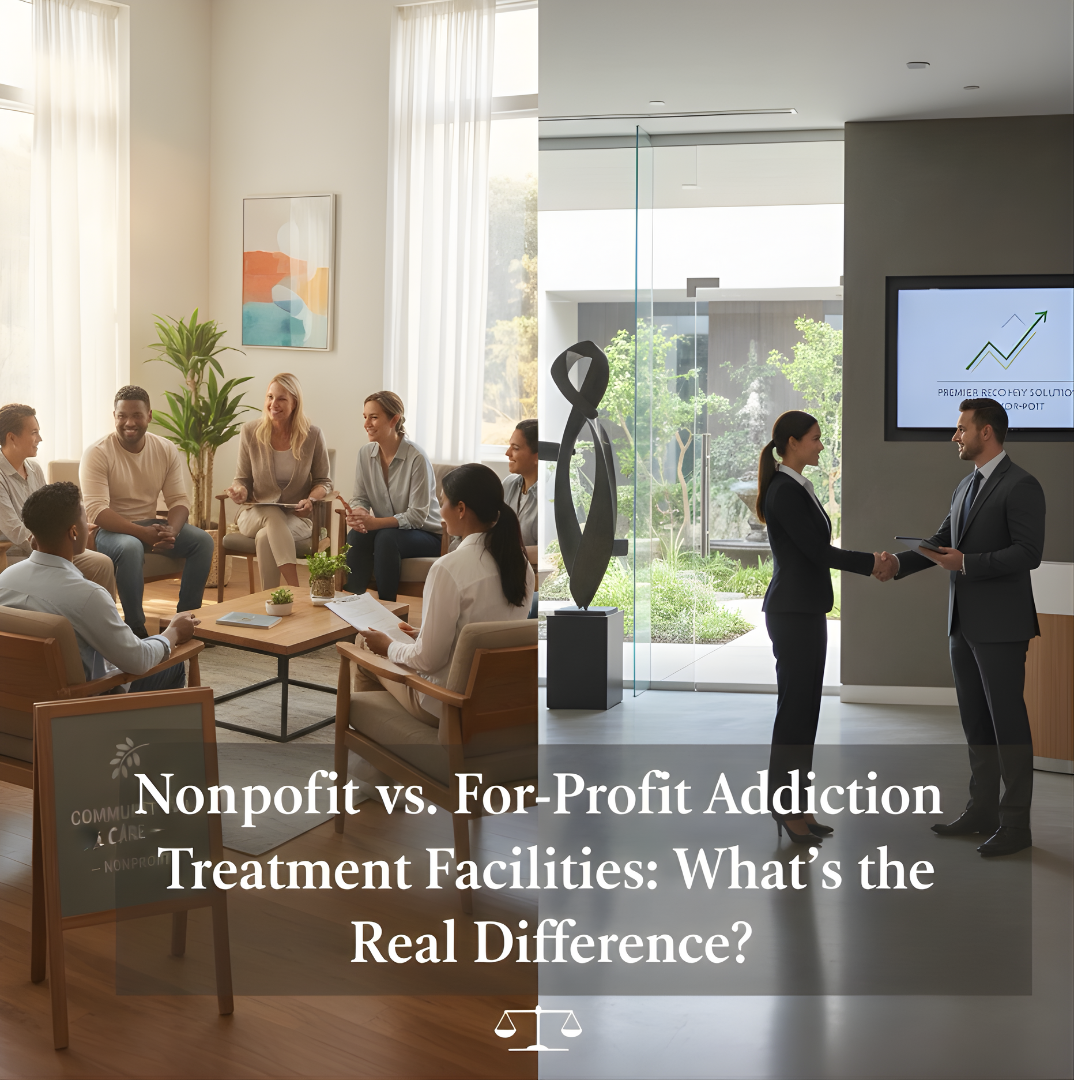
When you’re searching for addiction treatment centers for yourself or a loved one, you’ll quickly discover that facilities operate under two distinct models: nonprofit and for-profit. While both provide essential substance abuse treatment, understanding their fundamental differences can help you make the most informed decision for your recovery journey.
At Livengrin Foundation, we’ve been serving the Philadelphia community as a nonprofit organization for over 50 years. This experience has given us deep insight into how organizational structure directly impacts the quality and accessibility of care patients receive.
What Defines Nonprofit vs. For-Profit Treatment Centers
 The distinction goes far beyond tax status: it fundamentally shapes every aspect of how these facilities operate and deliver care.
Nonprofit addiction treatment centers like Livengrin operate with a mission-driven approach. Any revenue generated gets reinvested directly back into patient care, facility improvements, and community outreach programs. These organizations exist primarily to serve their communities, not generate profits for shareholders or investors.
For-profit facilities operate as businesses with the primary goal of generating revenue for owners and investors. While they absolutely provide quality care, their operational decisions must consider financial returns alongside patient outcomes.
How Funding Differences Impact Your Care
The way these facilities fund their operations directly affects the services available to you and your family.
Nonprofit Funding Sources
- Federal, state, and private grants
- Community donations and fundraising events
- Foundation support
- Patient fees and insurance reimbursements
- Corporate sponsorships and partnerships
This diverse funding allows nonprofit drug rehab and alcohol rehab centers to offer services that might not be financially viable in a for-profit model. For example, Livengrin can provide extensive family support programs and community education initiatives because we’re not solely dependent on patient fees.
For-Profit Funding Sources
- Patient fees and insurance payments
- Private investment capital
- Loans and financing
- Revenue from premium services and amenities
This funding structure means for-profit facilities must prioritize services that generate the highest returns, which can sometimes limit comprehensive care options.
Treatment Approaches: Mission vs. Margin
The most significant differences emerge in how these facilities approach treatment itself.
Comprehensive Care at Nonprofit Centers
 Nonprofit facilities are substantially more likely to offer comprehensive services that address your whole person, not just addiction. Research shows that nonprofit rehab centers provide:
- 70% more tobacco cessation support compared to for-profit facilities
- Higher rates of psychiatric screening and mental health services
- More robust social services and case management
- Suicide prevention and crisis intervention programs
- Integrated treatment for co-occurring mental health disorders
At Livengrin, we treat the person, not just the addiction. Our approach recognizes that substance abuse treatment must address underlying mental health conditions, family dynamics, and social factors that contribute to addiction.
Specialized Focus at For-Profit Centers
For-profit facilities often focus primarily on substance use disorders, with less emphasis on co-occur-ring mental health conditions. While this specialization can be beneficial, it may not address the full scope of your recovery needs.
Research indicates that 91.9% of for-profit facilities primarily treat SUDs only, compared to a more integrated approach at nonprofit centers that treat both addiction and mental health simultaneously.
Cost and Financial Accessibility
One of the most practical differences you’ll encounter relates to cost and payment options.
Nonprofit Affordability Advantages
Philadelphia rehab centers operating as nonprofits typically offer:
- Sliding scale fees based on your income
- Financial assistance programs for uninsured patients
- Payment plans that make treatment accessible
- Medicare and Medicaid acceptance at higher rates
- Reduced-cost or free services through grant funding
At Livengrin, we believe financial barriers should never prevent someone from accessing life-saving treatment. Our financial counselors work with every family to find solutions that make treatment possible.
For-Profit Pricing Structure
For-profit facilities generally operate with:
- Higher baseline costs (ranging from $6,000-$60,000 for 30-day programs)
- Limited insurance acceptance (often excluding Medicare/Medicaid)
- Premium pricing for luxury amenities and private accommodations
- Self-pay requirements for many services
While some for-profit centers offer payment plans, the fundamental cost structure remains higher due to the need to generate profits.
Quality of Care and Long-Term Outcomes
Both nonprofit and for-profit facilities can provide excellent care, but their approaches to quality differ significantly.
Nonprofit Quality Indicators
Mission-driven organizations invest in quality improvements that may not generate immediate revenue:
- Lower staff turnover due to mission alignment
- Continuous staff training funded through grants and donations
- Evidence-based practices implemented regardless of cost
- Long-term patient relationships that extend beyond treatment completion
- Community partnerships that enhance recovery support
For-Profit Quality Considerations
 For-profit facilities may excel in certain areas:
- Luxury amenities and comfortable accommodations
- Rapid program implementation when market demand exists
- Specialized niche services for specific populations
- Technology integration when it enhances efficiency
However, they may be less likely to offer services that don’t generate sufficient revenue, such as emergency psychiatric care or extensive family programming.
The Livengrin Nonprofit Advantage
As a nonprofit organization deeply rooted in the Philadelphia community, Livengrin exemplifies how this model benefits patients and families:
Community Investment: Every dollar we save through efficient operations gets reinvested into better care, expanded services, and community education programs.
Comprehensive Services: We offer everything from intensive outpatient programs to specialized treatment for first responders, family therapy, and continuing care coordination: because recovery requires comprehensive support.
Accessible Care: Our financial assistance programs ensure that no one gets turned away due to inability to pay. We work with families to find solutions that make treatment possible.
Long-Term Relationships: We’re not just here during your treatment stay. Our alumni programs, family support groups, and community events create lasting connections that support lifelong recovery.
Innovation Without Profit Pressure: We can implement new, evidence-based treatments based on patient need rather than profit potential.
Making Your Decision: Which Model Is Right for You?
The choice between nonprofit and for-profit addiction treatment centers should be based on your specific needs, financial situation, and recovery goals.
Consider nonprofit treatment if you:
- Need comprehensive mental health and addiction services
- Have limited financial resources or insurance coverage
- Value long-term community support and alumni programs
- Want treatment decisions based on clinical need rather than profitability
- Prefer a mission-driven approach to care
For-profit treatment might suit you if you:
- Have comprehensive insurance coverage or significant financial resources
- Prefer luxury amenities and private accommodations
- Need highly specialized niche services
- Value rapid program enrollment and premium customer service
Your Next Steps Toward Recovery
Whether you choose nonprofit or for-profit treatment, the most important decision is seeking help now. Substance abuse treatment works, and recovery is possible regardless of which model you select.
At Livengrin Foundation, we’re here to help you navigate these decisions with compassion and expertise. Our admissions team can discuss your specific needs, insurance coverage, and financial options during a confidential consultation.
Ready to take the next step? Contact Livengrin Foundation today at livengrin.org or call our admissions line. Our experienced staff will help you understand your options and begin your journey to-ward lasting recovery.
Remember: seeking help isn’t just brave: it’s the first step toward reclaiming your life and rebuilding relationships with those who matter most. You don’t have to face addiction alone, and you deserve compassionate, comprehensive care that treats you as a whole person.
The path to recovery starts with a single phone call. Let us help you take that crucial first step.