
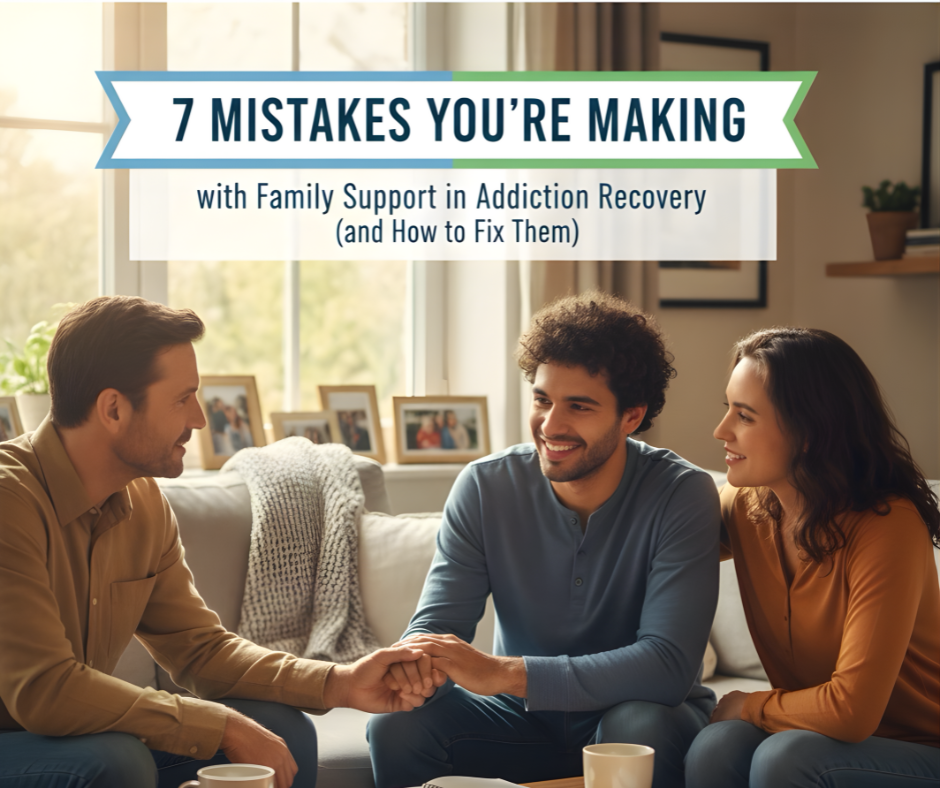
For over 50 years, Livengrin Foundation has walked alongside thousands of families navigating the complex journey of addiction recovery. From our Philadelphia headquarters to families across the nation, we’ve witnessed the incredible power of informed family support, and the unintended harm that well-meaning loved ones can sometimes cause.
If you’re supporting someone through addiction recovery, you’re not alone in feeling overwhelmed, confused, or worried about saying or doing the wrong thing. The truth is, even the most loving families make mistakes when they don’t understand how addiction affects the brain and what truly helps someone heal.
Let’s explore seven common mistakes families make during addiction recovery and, more importantly, how you can transform these missteps into powerful tools for healing.
Mistake #1: Trying to Fix Everything for Your Loved One
 Your heart breaks watching someone you love struggle with substance abuse. The natural response? Jump in and solve every problem, remove every obstacle, and shield them from any discomfort. But here’s what addiction treatment centers have learned: when you try to fix everything, you accidentally rob your loved one of the opportunity to build their own recovery muscles.
How to Fix It: Shift from rescuing to empowering. Ask yourself, “Will doing this help them grow stronger, or will it keep them dependent on me?” Support their decisions rather than making decisions for them. When they face a challenge, try saying, “What do you think would help in this situation?” instead of immediately jumping in with solutions.
This doesn’t mean being cold or uncaring, it means loving them enough to let them build confidence through their own problem-solving.
Mistake #2: Minimizing the Severity of Addiction
“It’s just a phase.” “Everyone experiments.” “They’ll grow out of it.” These phrases might feel comforting in the moment, but they send a dangerous message that addiction isn’t serious enough to war-rant professional help or sustained effort.
How to Fix It: Acknowledge addiction for what it is, a complex medical condition that affects the brain. Use language that validates their experience: “I can see you’re really struggling, and I want to understand how I can best support you.” Be honest about your concerns while avoiding blame or judgment.
When you treat addiction with the seriousness it deserves, you’re telling your loved one that their recovery matters and that you believe in their ability to heal.
Mistake #3: Neglecting Your Own Well-Being
Family members often become so consumed with their loved one’s addiction that they lose them-selves in the process. You skip meals, lose sleep, cancel plans with friends, and put your own health on the back burner. This leads to caregiver burnout, and eventually, you won’t have anything left to give.
How to Fix It: Self-care isn’t selfish; it’s essential. Schedule time for activities that restore your energy. Connect with other families who understand what you’re going through. Consider attending Al-Anon meetings or family therapy sessions specifically designed for loved ones of people in recovery.
Remember: you can’t pour from an empty cup. Taking care of yourself ensures you can provide consistent, quality support for the long haul.
Mistake #4: Enabling Instead of Supporting
 There’s a crucial difference between supporting someone and enabling their addiction. Enabling looks like giving them money when you suspect they’ll use it for substances, lying to cover up their mistakes, or consistently bailing them out of consequences. These behaviors, though motivated by love, actually prevent recovery by removing natural motivation to change.
How to Fix It: Set clear boundaries and stick to them. This might mean saying no to financial re-quests, refusing to make excuses for their behavior, or allowing them to face the natural consequences of their choices. Boundaries aren’t punishments: they’re loving limits that protect both of you.
Supporting looks like: “I love you, and I won’t give you money, but I’ll drive you to a treatment appointment” or “I believe in your ability to handle this situation on your own.”
Mistake #5: Expecting Instant Results
Recovery doesn’t happen overnight, and expecting immediate transformation sets everyone up for disappointment. Addiction changes brain chemistry and healing those changes takes time. When families expect instant results, they often become discouraged by normal setbacks and may inadvertently pressure their loved one to “hurry up and get better.”
How to Fix It: Educate yourself about the recovery process so you understand that progress often looks like two steps forward, one step back. Celebrate small victories: 30 days clean, attending therapy consistently, or having an honest conversation about their struggles.
Stay focused on long-term progress rather than daily ups and downs. Recovery is measured in months and years, not days and weeks.
Mistake #6: Ignoring Professional Treatment Plans
 When your loved one enters an addiction treatment program, you might feel tempted to offer your own advice or disagree with their treatment approach. However, working against or undermining professional guidance can create confusion and instability during a vulnerable time.
How to Fix It: Collaborate with, don’t compete with, treatment professionals. Ask how you can best support the treatment plan at home. Attend family therapy sessions when recommended: these pro-vide a safe space to express concerns and learn effective communication strategies.
If you have questions about the treatment approach, discuss them with the treatment team rather than your loved one. This maintains clear boundaries and ensures everyone is working toward the same goals.
Mistake #7: Avoiding Difficult Conversations
Some families tiptoe around the topic of addiction, fearing they’ll say the wrong thing or trigger a re-lapse. This avoidance can make your loved one feel isolated and unsupported, as if their most significant struggle is too uncomfortable to discuss.
How to Fix It: Practice having honest, compassionate conversations about recovery. Use “I” statements to express your feelings: “I feel scared sometimes, and I want you to know I’m here to support you.” Ask open-ended questions: “How can I best support you today?” or “What’s been most helpful in your recovery so far?”
These conversations will feel awkward at first, but they become easier with practice and create deeper connection and understanding.
Building a Recovery-Supportive Environment
Beyond avoiding these common mistakes, consider how your family environment either supports or hinders recovery. Families with healthy communication, clear boundaries, and realistic expectations create the foundation for lasting healing.
Consider participating in family therapy or family education programs. At Livengrin Foundation, we’ve seen how family involvement in treatment significantly improves outcomes for everyone involved.
These programs teach you specific skills for supporting recovery while maintaining your own well-being.
Moving Forward Together
Supporting someone through addiction recovery is one of the most challenging things a family can face. You’ll make mistakes: we all do. The key is learning from them and adjusting your approach based on what actually helps rather than what feels natural.
Remember that recovery is possible. Every day, we witness individuals and families heal from the devastating effects of addiction. Your role as a supportive family member is crucial, but it’s different from what you might expect. You’re not responsible for fixing or curing addiction, but you can create an environment where healing thrives.
If your family is struggling with addiction, you don’t have to navigate this alone. Professional guidance makes all the difference in learning how to support effectively without enabling or burning out. Consider reaching out to addiction treatment centers that offer family support services: your entire family deserves the chance to heal and grow stronger together.
The journey isn’t easy, but with the right support and information, recovery becomes not just possible, but probable. Your loved one needs you to be their strongest ally, not their rescuer. And that makes all the difference.