
Addiction touches millions of lives, yet stigma continues to cloud the path to recovery. Too often, people facing substance use disorder are judged for their illness rather than supported in their healing. This stigma prevents people from seeking help, isolates families, and fuels cycles of shame that make recovery even harder.
At Livengrin Foundation, we know that breaking this stigma is not only possible – it’s essential. With nearly sixty years of experience, we’ve seen how communities, families, and individuals can change the conversation around addiction and recovery. Through education, lived experience, alumni leadership, and ongoing support after treatment, society can begin to replace stigma with understanding, and judgment with hope.
The Power of Lived Experience in Addiction Recovery
One of the most effective tools in dismantling stigma is lived experience. At Livengrin, many of our clinicians and staff are in recovery themselves or have walked alongside loved ones who struggled with addiction. This personal connection matters. It allows staff to engage with patients from a place of empathy, credibility, and authenticity.
Hearing someone say, “I’ve been where you are, and I know recovery is possible” is transformative. It gives patients hope, builds trust, and chips away at the idea that addiction defines a person forever. Instead, it reframes recovery as a story of resilience and growth.
Alumni Stories: Leadership Beyond Treatment
Livengrin alumni play a vital role in breaking the stigma. Alumni regularly return to share their experiences with patients currently in treatment. These moments are powerful – patients see firsthand that recovery is not just theory, but reality. Alumni stories showcase the ups and downs, the setbacks and triumphs, and the truth that while recovery takes effort, it is absolutely achievable.
We also invite family members of alumni to share their journeys of healing. Parents who once feared losing their children to addiction, or spouses who lived through years of uncertainty, offer hope to families just beginning their recovery journey. In some cases, families who lost loved ones to addiction bravely share their experiences. These stories underscore both the urgency of seeking treatment and the hope that healing brings.
For society at large, these voices matter. Addiction thrives in secrecy, while stigma tells people to hide their past. At Livengrin, we believe recovery should be celebrated. Alumni leadership creates role models not just for patients, but for entire communities learning how to understand addiction.
Preparing for Life After Treatment
Treatment is an essential first step, but recovery is lifelong. Life after treatment brings new challenges such as returning to work, reconnecting with family, rebuilding trust, and avoiding triggers in daily life.
That’s why Livengrin emphasizes comprehensive aftercare planning. Before discharge, each patient works with their treatment team to design a plan that may include:
- Outpatient care through partial hospitalization, intensive outpatient, or general outpatient programs.
- Peer support groups such as 12-step programs, SMART Recovery, or community-based support networks.
- Family engagement, encouraging loved ones to attend Nar-Anon or education sessions.
- Sober living referrals for those who need additional structure.
- Alumni involvement, creating opportunities to give back and remain connected.
Life after treatment is not about perfection. Relapse may occur, and setbacks are possible. But with strong aftercare and a supportive community, recovery is sustainable.
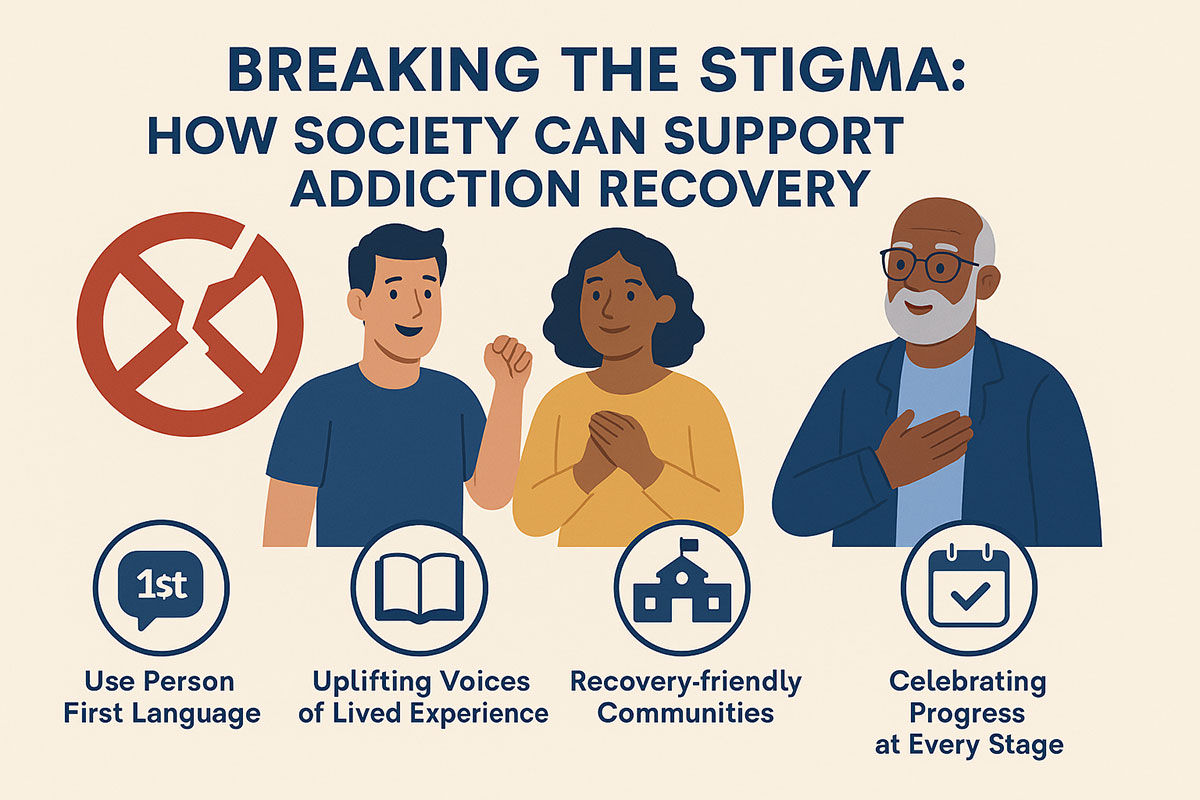
How Society Can Break the Stigma
While families and treatment providers play key roles, society also has a responsibility to reduce stigma. Outdated ideas about addiction often perpetuate shame. People still use labels like “addict” or assume recovery is simply about willpower. In reality, addiction is a chronic disease that requires comprehensive treatment and support.
Here’s how society can help:
1. Use Person-First Language
Language shapes perception. Saying “a person with a substance use disorder” instead of “an addict” affirms dignity and humanity.
2. Educate Yourself About Addiction
Addiction is a brain disease, not a moral failing. Learning about how it develops – and how it can be treated – helps dispel myths and encourages compassion.
3. Uplift Voices of Lived Experience
Celebrate the stories of people in recovery. Their experiences are proof that change is possible and that stigma can be overcome.
4. Build Recovery-Friendly Communities
Employers, schools, and organizations can support recovery through flexible policies, employee assistance programs, and stigma-free environments.
5. Celebrate Progress at Every Stage
Recovery is not linear. Every milestone – from 30 days sober to 10 years – deserves recognition. Celebrating progress motivates individuals and helps normalize recovery in society.
Why Stigma-Free Support Matters
When stigma falls away, barriers to care disappear. People feel safer asking for help, families feel less ashamed reaching out, and communities begin to see recovery as a collective success. Breaking stigma also saves lives. Too often, delays in seeking treatment stem from fear of judgment. By normalizing addiction treatment and celebrating recovery, society can ensure people access help sooner – before consequences become irreversible.
Healing Happens Together
At Livengrin, we believe recovery is built on connection. No one should face addiction alone, and no one should carry the weight of stigma in silence. Our alumni, staff, families, and patients prove every day that addiction does not define a life. With treatment, community support, and compassion, people not only recover – they thrive.
If you or someone you love is struggling with addiction, know this: help is available, and recovery is possible. Together, we can break the stigma, open doors to healing, and build a society where every person is given the dignity, respect, and support they deserve.