
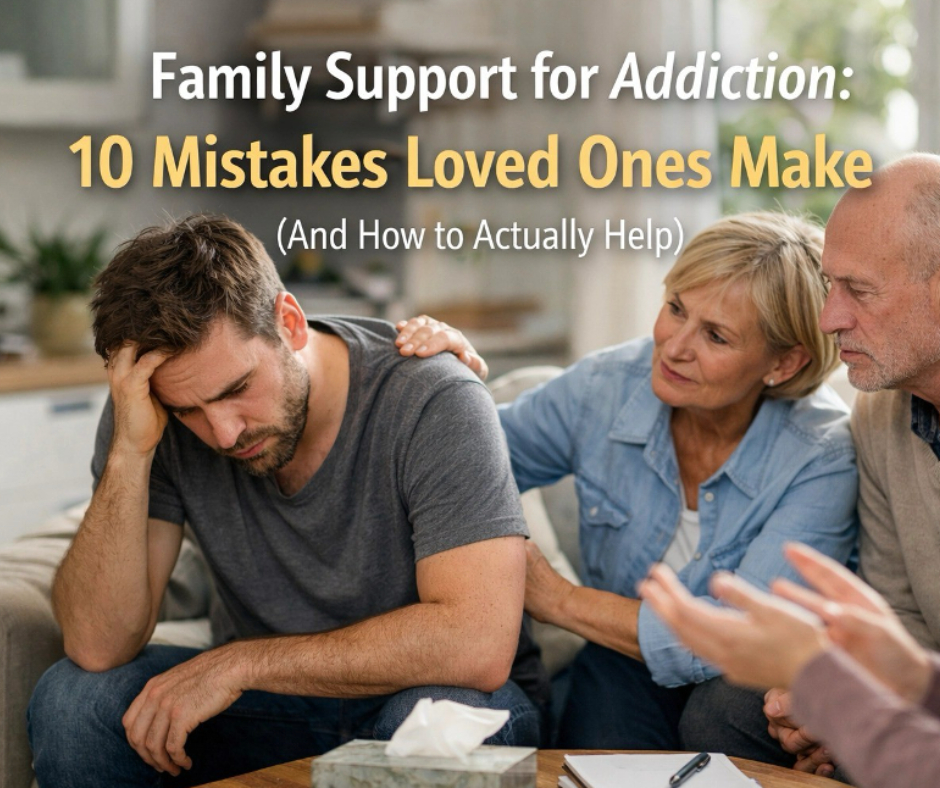
For over 50 years, Livengrin Foundation has worked with families across Pennsylvania, New Jersey, Delaware, and New York who are navigating one of the most difficult challenges they’ll ever face: supporting a loved one through addiction. We’ve seen firsthand that family support addiction ef-forts can either accelerate recovery or unintentionally delay it: and the difference often comes down to avoiding just a few common mistakes.
If someone you love is struggling with substance use, you’re probably feeling overwhelmed, scared, and unsure of what to do next. That’s completely normal. But here’s what we’ve learned from five decades of clinical experience: your support matters enormously, and with the right approach, you can become one of the most powerful forces in your loved one’s recovery journey.
Let’s talk about the 10 mistakes we see most often: and what actually works instead.
1. Believing “Tough Love” Means Cutting Them Off
 You’ve probably heard it before: “Let them hit rock bottom.” The idea is that only when things get bad enough will they finally get help. Here’s the truth: research shows that isolation and withdraw-al of support actually increase the risk of overdose and death.
Rock bottom isn’t a requirement for recovery: it’s a myth that costs lives.
What to do instead: Practice engaged support. Stay connected. Let your loved one know you’re there, you care, and you believe recovery is possible. Early intervention with compassionate support consistently produces better outcomes than waiting for a crisis.
2. Confusing Support with Enabling
This one’s tricky. Families often swing between two extremes: either withdrawing completely (see mis-take #1) or unintentionally enabling destructive behavior by removing all consequences. Both approaches are based on the false idea that there’s no middle ground.
What to do instead: Support the person, not the addiction. You can love someone unconditionally while still setting boundaries around behaviors. Offer support for treatment, recovery activities, and healthy goals: but don’t shield them from the natural consequences of substance use. Think of it this way: you’re not their safety net for continued use, you’re their cheerleader for recovery.
3. Leaving Family Out of Treatment
 Addiction doesn’t happen in isolation, and recovery can’t either. When addiction treatment centers exclude family members from the healing process, they miss a crucial piece of the puzzle. Your relationship dynamics, communication patterns, and family history all play a role in both the development of addiction and the path to recovery.
What to do instead: Look for treatment programs that actively involve families. At Livengrin, we in-corporate family support throughout our programming because we know that positive family involvement leads to better long-term outcomes. Ask potential treatment providers about family therapy sessions, educational workshops, and whether you’ll have regular communication with the clinical team.
4. Ignoring Your Own Self-Care
 Here’s something many family members don’t hear enough: you need support too. Supporting someone through addiction is emotionally exhausting, and if you burn out, you can’t be there for anyone: including yourself.
We see this all the time: parents who stop sleeping, partners who develop anxiety disorders, siblings who sacrifice their own mental health trying to save someone else. You can’t pour from an empty cup.
What to do instead: Make your own recovery support a priority. Join a support group like Al-Anon or Nar-Anon. Consider therapy for yourself. Exercise, maintain friendships, and allow yourself permission to experience joy even while your loved one is struggling. This isn’t selfish: it’s essential.
5. Trying to Control or Fix Everything
It’s natural to want to solve every problem and remove every obstacle from your loved one’s path. But here’s what we’ve learned: recovery requires the person to develop their own problem-solving skills and resilience. When you do everything for them, you actually delay their growth.
What to do instead: Shift your role from fixer to supporter. Let them experience challenges and learn from mistakes. Your job is to provide encouragement, celebrate small wins, and help them back up when they stumble: not to prevent every fall. This builds the self-efficacy they’ll need for long-term recovery.
6. Using Blame, Shame, or Judgment
When you’re frustrated, scared, or exhausted, it’s easy to let comments slip: “How could you do this to us?” “You’re being selfish.” “If you loved us, you’d stop.” These statements, while understandable, create shame: and shame is fuel for continued substance use.
What to do instead: Express concern without blame. Try statements like: “I’m worried about you.” “I’ve noticed changes that concern me.” “I care about you and want to help.” Focus on specific behaviors rather than character attacks, and always communicate that you believe in their ability to recover.
7. Planning Intervention Services Without Strategy
Interventions can be powerful tools for motivating someone to seek treatment, but they can also backfire spectacularly. One major mistake? Inviting the wrong people. That uncle who’s been critical for years? The friend they had a falling out with? These individuals increase tension and decrease the likelihood of success.
What to do instead: If you’re considering an intervention, work with professionals who specialize in intervention services and carefully select participants. Only include people with positive, supportive relationships who share the goal of treatment. Keep the tone concerned and loving, not accusatory. Have a concrete plan: including pre-arranged treatment options: before you begin.
8. Refusing to Educate Yourself About Addiction
Many families operate on outdated beliefs about addiction: that it’s a moral failing, that willpower is enough, or that “real” addicts look a certain way. These misconceptions lead to ineffective support and unnecessary conflict.
What to do instead: Learn the science. Addiction is a chronic brain disease that changes neural path-ways and affects decision-making. Understanding this doesn’t excuse harmful behavior, but it helps
you respond more effectively. Read credible sources, attend family education sessions, and ask questions of treatment professionals. Knowledge replaces fear with understanding.
9. Setting No Boundaries (or All the Wrong Ones)
Boundaries aren’t about punishment: they’re about creating a healthy environment for everyone in the family. Some families set no boundaries at all, allowing chaos to reign. Others set rigid boundaries based on control rather than health, like “I’ll never speak to you again unless you’re sober.”
What to do instead: Set clear, consistent boundaries around what you will and won’t accept, and communicate them calmly. These might include: “I won’t give you money, but I’ll help you find job re-sources.” “You can’t stay here if you’re using, but I’ll help you find treatment.” “I won’t lie to cover up your substance use.” Then: and this is crucial: follow through. Boundaries without enforcement are just suggestions.
10. Thinking You Can Do This Alone
 Too many families try to navigate addiction recovery in isolation, either from embarrassment, privacy concerns, or the belief that they should be able to handle it themselves. This approach leads to burnout, mistakes, and missed opportunities for support.
What to do instead: Build a support network. Connect with other families who understand what you’re going through. Work with community support resources. Consult with professionals at reputable addiction treatment centers who can guide you through decisions you’ve never had to make before. There’s no award for doing this alone: and there’s tremendous strength in asking for help.
What Effective Family Support Actually Looks Like
Now that we’ve covered what not to do, let’s talk about what actually helps. Effective family support for addiction involves:
Balanced engagement: You stay connected and involved without enabling destructive behavior.
Clear communication: You express concern and hope without blame or shame.
Healthy boundaries: You protect your own wellbeing while remaining available for recovery-focused support.
Education: You understand addiction as a disease and respond from knowledge rather than fear.
Professional guidance: You work with treatment professionals who can provide expertise and perspective.
Self-care: You maintain your own mental and physical health throughout the process.
Flexibility: You recognize that no two recovery paths look the same and adapt your approach as needed.
Long-term commitment: You understand that recovery is a process, not an event, and you’re in it for the long haul.
You Don’t Have to Navigate This Alone
At Livengrin, we’ve spent over five decades helping families transform from overwhelmed to empowered. We meet families where they are, provide education and resources, and create space for healing: not just for the individual struggling with addiction, but for everyone affected by it.
Whether your loved one is ready for treatment today or you’re still trying to figure out your next step, we’re here. Our support services include resources for families at every stage of the journey, from first conversations to long-term recovery support.
Recovery is possible. Families heal. And with the right approach and support, you can play a crucial role in your loved one’s path to wellness while protecting your own wellbeing in the process.
If you need guidance on supporting a loved one with addiction, call us at (215) 638-5200. Our team understands what you’re going through, and we’re here to help.