
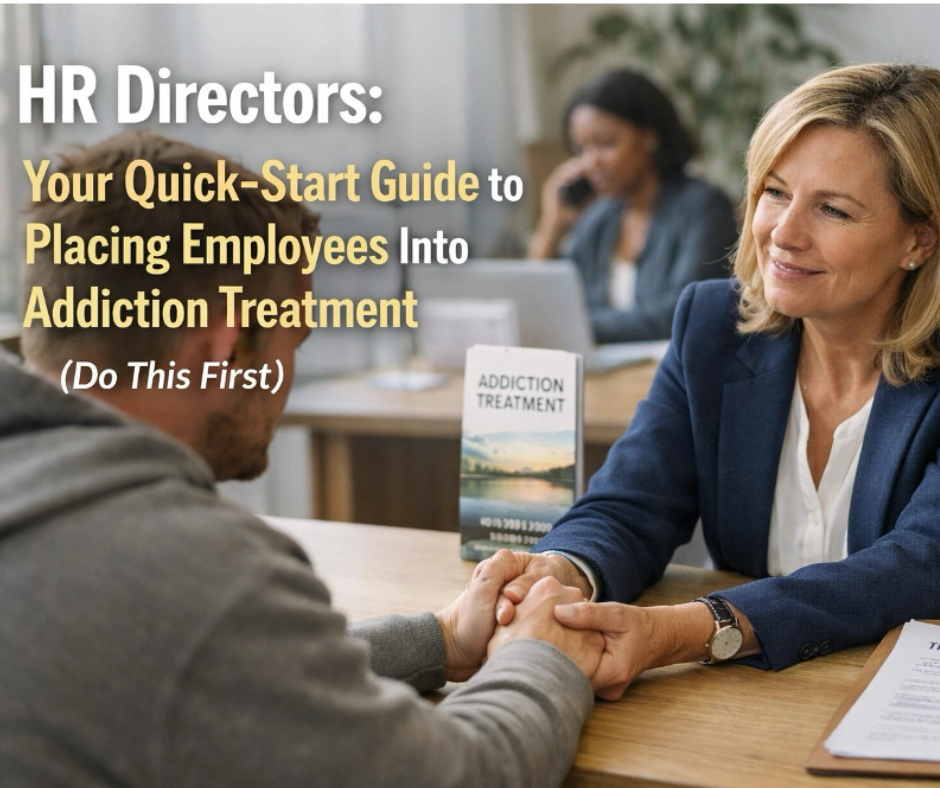
 For over 50 years, Livengrin Foundation has partnered with Pennsylvania and New Jersey employers to create pathways to recovery that protect both employee dignity and workplace productivity.
Through our Livengrin at Work program, we’ve helped hundreds of companies navigate one of the most challenging conversations in human resources: identifying an employee struggling with sub-stance use disorder and connecting them to treatment.
This isn’t theoretical guidance. This is the actual roadmap that works: the one that protects your organization legally, supports your employee compassionately, and creates the highest likelihood of successful recovery and return to work.
The Real Cost of Waiting
 Before we talk about process, let’s establish why this matters to your bottom line.
Untreated substance use disorder costs U.S. employers $81 billion annually through absenteeism, reduced productivity, workplace accidents, and employee turnover. You’re likely already seeing the impact: increased sick days, missed deadlines, personality changes, safety incidents, or complaints from coworkers who are picking up the slack.
The average cost of replacing an employee range from 50% to 200% of their annual salary when you factor in recruitment, onboarding, and lost productivity. Treatment is significantly less expensive than turnover: and infinitely more humane.
Early intervention dramatically improves outcomes. Employees who receive treatment through work-place referrals show higher completion rates and longer-term recovery success than those who seek help independently. Your action today could save a career, a family, and quite possibly a life.
Step One: Document First, Discuss Second
Here’s what most HR directors get wrong: they lead with concern instead of facts.
Your first priority isn’t the conversation. It’s building a factual, observable record of workplace performance and behavior changes. This documentation serves three critical purposes: it provides legal protection, ensures consistency across similar situations, and gives you confidence when the actual conversation happens.
Document these specific categories:
- Performance issues: Missed deadlines, declining quality of work, incomplete projects, errors re-quiring correction
- Attendance patterns: Frequent Monday or Friday absences, extended lunch breaks, unexplained disappearances from the workspace, patterns of calling out
- Physical observations: Bloodshot eyes, unusual odors, slurred speech, unsteady gait, extreme fatigue or hyperactivity
- Conduct concerns: Mood swings, conflicts with colleagues, inappropriate reactions to feedback, defensive behavior
Keep your documentation objective. Write “Employee appeared unsteady when walking to conference room on February 18” rather than “Employee seemed drunk.” Record what you observed, not what you concluded.
This isn’t about building a case against someone. It’s about creating clarity for a difficult conversation and ensuring you’re approaching the situation fairly and consistently with your company’s existing alcohol and drug-use workplace policies.
Step Two: Coordinate with Your EAP Before the Employee Con-versation
This is the step that separates effective interventions from well-intentioned disasters.
Connect with your Employee Assistance Program counselor before or during your initial con-versation with the employee. If you don’t have an EAP relationship, this is the moment to establish one: or to contact a treatment partner like Livengrin directly.
Your EAP counselor brings expertise you don’t have: knowledge of treatment options, experience navigating insurance benefits, understanding of confidentiality requirements, and skill in motivational conversations. They become your behind-the-scenes partner in this process.
 At Livengrin, we work directly with HR departments and EAPs to create coordinated support systems. When you call us before the employee conversation, we can:
- Review your documentation to assess the situation
- Explain available treatment levels and what each involves
- Verify insurance coverage and out-of-pocket costs
- Prepare for ADA accommodations if applicable
- Outline the placement process step-by-step
This preparation ensures you walk into the conversation with answers, not just concerns.
Step Three: The Conversation Structure That Actually Works
Schedule a private meeting in a neutral, confidential space. Include a witness from HR if appropriate, but keep the meeting small and focused.
Lead with observed facts, not accusations:
“I need to discuss some workplace concerns. Over the past six weeks, I’ve documented several in-stances where your performance hasn’t met our expectations. I want to share what I’ve observed and hear your perspective.”
Review your documented observations. Be specific. Give dates and examples.
Then create the opening:
“These changes are concerning because they’re not typical for you. Sometimes performance issues have underlying causes: health concerns, personal challenges, substance use. Our company wants to support employees who are struggling. Is there something going on that we should know about?”
If the employee acknowledges substance use disorder: or if the pattern clearly suggests it even with-out acknowledgment: present the pathway forward.
 If the employee is covered under the ADA (which includes substance use disorder as a protected disability), you must engage in an interactive process. This means both you and the employee can propose reasonable accommodations until you reach a mutually agreed solution. Treatment leave, modified schedules upon return, and specific performance expectations are all potential accommodations.
If ADA protections don’t apply, you can still present options: treatment attendance with potential return to work, particularly if your organization falls under the Family and Medical Leave Act. Frame this as a supported opportunity, not an ultimatum.
Step Four: The Placement Process (Here’s Where Livengrin Be-comes Your Partner)
Once the employee agrees to pursue treatment: or once it becomes a condition of continued employment: timing matters enormously. Provide treatment resources immediately during that initial conversation.
This is where having a pre-established relationship with Livengrin makes the difference between fol-low-through and fade-out.
We streamline the placement process:
- Immediate assessment: Our admissions team conducts a confidential clinical assessment, typically within 24 hours of initial contact
- Insurance verification: We handle the insurance coordination directly, explaining coverage, costs, and what the employee should expect
- Level of care determination: We recommend the appropriate treatment setting: from outpatient programs that allow continued work to residential treatment for more intensive needs
- Placement coordination: We schedule the start date and walk the employee through what to bring, what to expect, and how to prepare
For HR directors, we provide a clear timeline and regular updates while maintaining appropriate confidentiality boundaries. You’ll know when treatment begins, the expected duration, and when return-to-work planning should start: without receiving protected health information.
Our Livengrin at Work program specifically addresses the unique needs of employed individuals. We understand that fear of job loss is often the biggest barrier to seeking help. Our program-ming incorporates workplace reintegration planning, schedule flexibility where clinically appropriate, and ongoing support that reduces relapse risk during the vulnerable early months back at work.
Step Five: Plan the Return-to-Work Transition
The employee’s treatment counselor or EAP coordinator should initiate a planning conversation that includes you and an HR representative before the employee returns. This typically happens during the final week of treatment.
Address these critical elements:
- Work schedule: Does the employee need a graduated return (part-time building to full-time)? Do they need to attend ongoing outpatient sessions or support meetings?
- Responsibility modifications: Are there temporary adjustments needed to reduce stress or re-move access to substances (particularly relevant in healthcare, hospitality, or pharmaceutical set-tings)?
- Continuing care requirements: What ongoing treatment or monitoring is recommended? How will the employee balance work and recovery support?
- Clear performance expectations: What metrics will you use to evaluate successful reintegration? What support is available if challenges arise?
- Confidentiality management: How will the employee’s absence be explained to coworkers? What information stays private?
 At Livengrin, our continuum of care includes robust outpatient programming designed specifically for working professionals. Employees can step down from intensive treatment to outpatient sessions scheduled around work commitments, maintaining recovery support without sacrificing employment.
You Don’t Have to Navigate This Alone
The most common feedback we hear from HR directors after their first employee placement: “I wish I had called you sooner.”
You don’t need to become an addiction treatment expert. You need a partner who understands both the clinical complexity of substance use disorder and the practical realities of workplace management.
Livengrin serves as that partner for companies throughout Pennsylvania and New Jersey. We’ve built our workplace programs on a foundation of respect for both employee privacy and employer accountability. We know how to have difficult conversations compassionately. We understand insurance complexities and legal requirements. Most importantly, we’ve seen thousands of employees re-turn to productive, fulfilling careers after treatment.
Your employee’s recovery journey begins with your willingness to take the first step. The process we’ve outlined: documentation, EAP coordination, structured conversation, streamlined placement, and return-to-work planning: creates the framework for success.
What to Do Right Now
If you’re reading this because you have a specific employee concern today, here’s your immediate action plan:
- Start your documentation if you haven’t already
- Contact your EAP or call Livengrin directly at the number on our website
- Schedule the conversation for this week, not next month
- Prepare your resources so you can provide immediate next steps
For more information about Livengrin at Work and how we partner with employers to create compassionate, effective pathways to treatment, visit livengrin.org or contact our admissions team.
The conversation you’re avoiding might be the one that saves a life. We’re here to help you have it.