

For 60 years, Livengrin Foundation has stood beside Philadelphia-area families during their most difficult moments. We’ve answered calls at 2am from Bensalem. We’ve met parents in crisis at our Bucks County campus. We’ve walked alongside thousands of families who never imagined they’d be 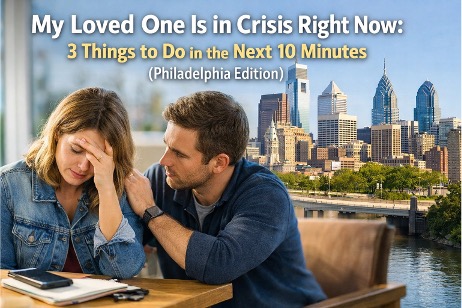 Googling “what to do when someone overdoses” at their kitchen table.
If you’re reading this right now, your hands might be shaking. Your heart might be racing. Someone you love is in crisis, and you need help now, not next week, not tomorrow, but right now.
You’re in the right place. What you do in the next ten minutes matters, and we’re going to walk through it together.
The Reality of Addiction Crises in the Philadelphia Region
 Addiction doesn’t follow a schedule. It doesn’t wait for business hours or convenient timing. In Philadelphia and the surrounding counties, we see families face crisis moments every single day, overdoses, dangerous withdrawal symptoms, erratic behavior that puts everyone at risk, or simply the moment when you realize that today is the day something has to change.
You are not alone in this. And more importantly, you don’t have to figure out the next steps by yourself.
Here are three immediate actions you can take right now. Read through all three first if you have time or jump straight to Step 1 if safety is your immediate concern.
Step 1: Prioritize Safety First (Next 2-3 Minutes)
Before anything else, before you start researching treatment centers or calling insurance companies, you need to make sure your loved one is physically safe right now.
Is Your Loved One Showing Signs of Overdose?
Call 911 immediately if you see any of these signs:
- Unconsciousness or inability to wake up
- Slow, shallow, or stopped breathing
- Choking sounds or gurgling
- Blue or purple lips or fingernails
- Limp body or lack of response to stimulation
While waiting for emergency services:
- Administer Narcan (naloxone) if available. Narcan can reverse an opioid overdose within minutes. In Pennsylvania and New Jersey, you can get Narcan without a prescription at most pharmacies, including CVS, Walgreens, and Rite Aid locations throughout the Philadelphia area.
- Turn them on their side to prevent choking if they
- Stay with them and keep them awake if possible, by talking to them, rubbing their chest, or ap-plying pressure to their nail beds.
- Don’t leave them alone, even after giving Opioids can outlast the Narcan, and they may need additional doses.
Pennsylvania’s Good Samaritan Law protects you from prosecution when you call 911 for an over-dose, even if drugs are present. Getting help is always the right choice.
Is Your Loved One in Immediate Danger But Not Overdosing?
If your loved one is threatening self-harm, showing extreme confusion, experiencing severe withdraw-al symptoms (like seizures, hallucinations, or uncontrollable shaking), or displaying violent or dangerous behavior:
Call 911 and tell them you’re dealing with a behavioral health crisis. Philadelphia police can dis-patch Crisis Intervention Response Team (CIRT) specialists trained in de-escalating these exact situations.
If the Situation Is Urgent But Not an Emergency
 If your loved one is coherent but clearly in crisis, perhaps they’re asking for help, they’re extremely intoxicated but breathing normally, or you’re worried about what might happen in the next few hours, you can move to Step 2.
Step 2: Determine the Level of Care Needed (Next 3-4 Minutes)
Not every crisis requires an ambulance, but every crisis requires action. Once immediate safety is se-cured, you need to assess what type of care your loved one needs right now.
Does Your Loved One Need Emergency Medical Care?
Go to the ER or call 911 if:
- They’re experiencing severe withdrawal symptoms (seizures, severe tremors, confusion, hallucinations, fever)
- They’ve consumed a dangerous amount of alcohol or substances in the last few hours
- They have chest pain, difficulty breathing, or other concerning physical symptoms
- They’re a danger to themselves or others
- You’re unsure and worried, when in doubt, the ER is always an option
Nearest Philadelphia-area hospitals with addiction medicine support:
- Einstein Medical Center Philadelphia (North Philadelphia)
- Temple University Hospital (North Philadelphia)
- Pennsylvania Hospital (Center City)
- Jefferson Health locations throughout the region
Does Your Loved One Need Immediate Detox or Stabilization?
If your loved one is physically dependent on alcohol or drugs but doesn’t require emergency room intervention, they likely need medical detoxification, a supervised process where medical professionals manage withdrawal symptoms safely.
Signs your loved one needs detox:
- They’ve been using regularly and want to stop but are afraid of withdrawal
- They’ve tried to quit on their own and experienced severe symptoms
- They’re using alcohol, benzodiazepines, or opioids daily (these require medical supervision to stop safely)
- They’re ready for help right now while motivation is high
At Livengrin, our detox program in Bensalem provides 24/7 medical supervision with physicians, nurs-es, and addiction specialists on-site. We can often admit patients the same day or within 24 hours, because we know that when someone is ready, we need to meet them in that moment.
Does Your Loved One Need Assessment and Guidance?
 Sometimes the crisis isn’t medical, it’s emotional, relational, or situational. Maybe you’ve just discovered your teenager is using. Maybe your spouse relapsed after years of sobriety. Maybe you’re simply at your breaking point and don’t know what to do next.
This is still a crisis, and it still requires immediate attention.
You don’t need to have all the answers. You don’t need to diagnose the problem or create a treatment plan. You just need to take the next step, and that’s where Livengrin comes in.
Step 3: Call Livengrin’s 24/7 Helpline Now (Next 3-4 Minutes)
Here’s what most Philadelphia families don’t realize: You don’t have to navigate this alone. You don’t have to guess whether your loved one needs detox or outpatient treatment. You don’t have to call ten different places trying to find an open bed.
Call Livengrin’s 24/7 helpline: (215) 638-5200
Here’s what happens when you call:
You’ll Speak with a Real Person Who Understands
No phone trees. No “leave a message and we’ll call you back during business hours.” When you call Livengrin day or night, you’ll speak with a trained intake specialist who’s had thousands of these con-versations. They know the fear you’re feeling. They know the urgency. And they know exactly how to help.
We’ll Help You Assess the Situation
Our intake team will ask questions to understand what’s happening right now:
- What substances is your loved one using?
- When did they last use?
- Are they experiencing withdrawal symptoms?
- Have they tried treatment before?
- What does their insurance cover?
- Are there legal issues involved?
- What’s their living situation?
You don’t need to know all these answers. Just tell us what you know, and we’ll help you figure out the rest.
We’ll Create an Immediate Action Plan
Based on your loved one’s needs, we’ll help you determine the right next step, whether that’s:
- Immediate admission to our detox program (often possible within 24 hours)
- Same-day or next-day outpatient assessment at our Bensalem or Philadelphia locations
- Guidance on safely getting your loved one to an ER if medical attention is needed first
- Resources for family support while you navigate this process
- Connection to our workforce programs if your loved one’s employment is at risk
We’ll Walk You Through Insurance and Logistics
We accept most major insurance plans and work with families throughout Pennsylvania and New Jersey. Our team will verify coverage while you’re on the phone and let you know exactly what to expect regarding costs. We also offer financial assistance for those who qualify, because no one should go without treatment due to finances.
We’ll Stay with You Until Your Loved One Is Safe
 Getting someone into treatment isn’t always straightforward. Sometimes loved ones are resistant. Sometimes there are logistical barriers. Sometimes you just need someone to talk through the fear and confusion.
We don’t hang up and wish you luck. We stay involved. We follow up. We check in. We adjust the plan if needed. We’ve been doing this for 60 years because we know that compassionate, persistent support makes all the difference.
Why Families Throughout Philadelphia Choose Livengrin
When you call us, you’re not just getting a treatment center, you’re getting a partner who’s been embedded in this community since 1966.
Our Bensalem campus serves as a comprehensive recovery hub with medical detox, residential treatment, and outpatient services all in one location. Our Philadelphia office provides accessible outpatient care for those who need treatment while maintaining work and family obligations.
We treat every individual as exactly that, an individual. The 22-year-old in crisis looks different from the 55-year-old executive, and we meet patients where they are with dignity, respect, and clinical expertise.
Our staff includes:
- Board-certified addiction medicine physicians
- Licensed clinical social workers
- Certified addiction counselors
- Nurses with decades of detox experience
- Case managers who navigate the complex insurance and legal systems daily
Most importantly, many of our team members are in recovery themselves. They know what your loved one is going through, not from a textbook, but from lived experience.
What Happens After This Crisis
Right now, you’re in survival mode. You’re trying to get through the next hour, the next phone call, the next moment of fear.
But here’s what we want you to know: This crisis can be the turning point. We’ve seen it thousands of times. The moment that felt like rock bottom becomes the foundation for lasting recovery.
Once your loved one is safe and stabilized, we’ll work together to build a comprehensive treatment plan that addresses not just the substance use, but the underlying factors driving it. We’ll involve family members in the healing process through our support programs. We’ll connect your loved one to resources that extend far beyond their time in treatment.
Recovery is possible. It starts with the next ten minutes.
Take Action Right Now
If your loved one is in immediate medical danger, call 911 first.
If you need guidance, assessment, or immediate admission to treatment, call Livengrin at (215) 638-5200 right now. We answer 24 hours a day, 7 days a week, 365 days a year.
If you want to learn more about our programs first, visit livengrin.org or explore our comprehensive treatment options.
You’ve already taken the hardest step by recognizing that your loved one needs help. Now let us walk beside you through what comes next. You don’t have to do this alone: and after 60 years of serving Philadelphia-area families, we’re not going anywhere.
Call us now: (215) 638-5200