
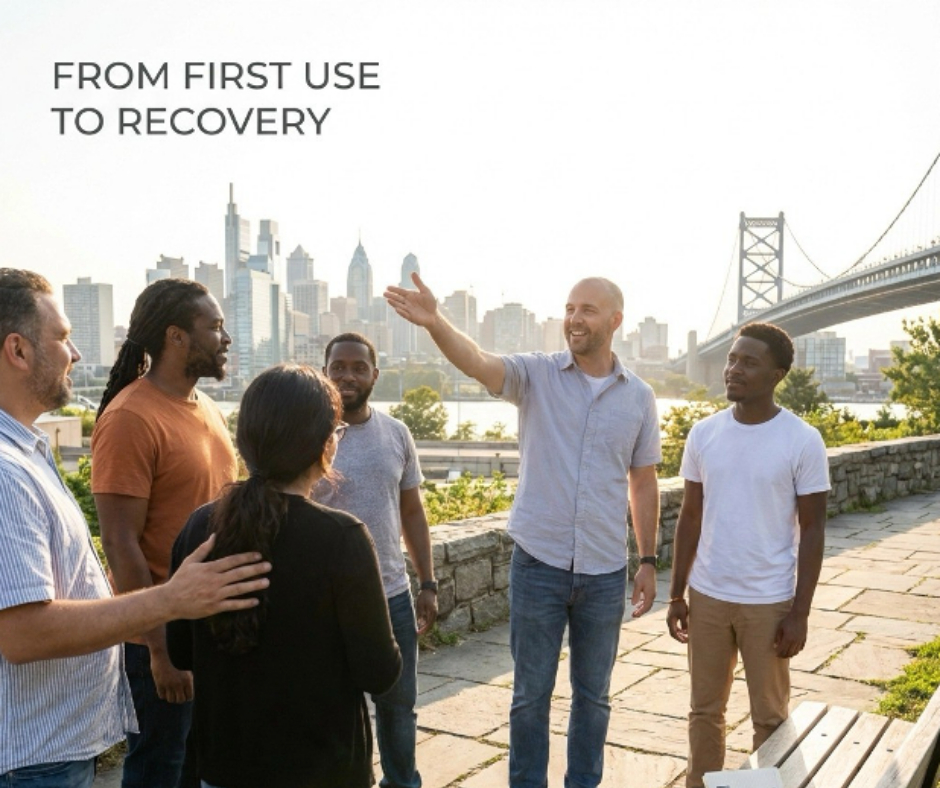
For over five decades, Livengrin Foundation has walked alongside thousands of Philadelphia and Bensalem families through the journey from addiction to recovery. We’ve seen how understanding the progression of addiction can transform confusion and fear into clarity and hope. Whether your loved one is a Temple University student experimenting with substances, a Bensalem factory worker man-aging chronic pain, or a Center City professional using alcohol to cope with stress, recognizing these seven stages can help you understand where they are: and most importantly, how to help.
Addiction doesn’t happen overnight. It’s a progressive process that unfolds differently for each per-son, sometimes over weeks, months, or years. By understanding these stages, Philadelphia-area fami-lies can identify warning signs early and take action before a crisis occurs.
Stage 1: Initial Use – The First Time
This stage represents the very first encounter with a substance. In our Philadelphia communities, this might look like a teenager at a house party in Fishtown trying marijuana for the first time, or a college student at Drexel experimenting with prescription stimulants during finals week.
What families should know: First use doesn’t predict addiction. Many people try substances once and never use again. However, certain factors: family history of addiction, mental health conditions, or early age of first use: can increase risk. If you discover your loved one has tried something for the first time, approach the conversation with curiosity rather than punishment.
At this stage, intervention focuses on education and open communication. Many Philadelphia schools and community centers offer prevention programs that help young people understand risks before they escalate.
Stage 2: Experimentation – Testing the Waters
During experimentation, use becomes more intentional but remains sporadic. Your loved one might drink at social gatherings in Northern Liberties, try different substances at concerts at the Mann Cen-ter, or use marijuana occasionally with friends. The key characteristic is that use hasn’t yet created negative consequences.
Local context: In Philadelphia’s diverse neighborhoods, experimentation often occurs within social groups. Whether it’s drinking at Eagles games, using substances at music festivals, or trying prescription drugs at college parties, peer influence plays a significant role.

Warning signs to watch for:
- Changes in friend groups
- New interest in parties or social events where substances are present
- Asking questions about drugs or alcohol
- Finding paraphernalia or substances
Family response: This is an optimal time for honest conversations about family values, addiction his-tory, and risk factors. Many Bensalem and Philadelphia families find success in setting clear expectations while maintaining open dialogue.
Stage 3: Regular Use – Developing Patterns
Regular use marks a shift from occasional experimentation to predictable patterns. Your loved one might have a few drinks after work at Bensalem’s local bars, use marijuana most weekends, or take prescription medications more frequently than prescribed. They’re not using daily, but a routine has emerged.
Philadelphia-specific examples:
- A Center City lawyer stopping for drinks after court every Tuesday and Thursday
- A Temple student using Adderall every week during study sessions
- A South Philadelphia resident drinking beer while watching every Phillies game
At this stage, the brain begins adapting to regular dopamine influx, setting the foundation for tolerance and dependence. While your loved one can still function normally in most areas of life, you might notice subtle changes in priorities or behavior.
What families notice:
- Substances become part of regular routines
- Mood changes when plans involving substances fall through
- Increased tolerance requiring more to achieve the same effect
- Defensive responses when substance use is questioned
Stage 4: Risky Use – The Turning Point
This critical stage represents a significant escalation where substance use begins creating real problems. In our communities, this might look like a Bensalem resident driving under the influence, a Temple student missing classes due to hangovers, or a Philadelphia professional showing up to work impaired.
High-risk behaviors we see locally:
- Driving while intoxicated on I-95 or local Philadelphia streets
- Missing work at Jefferson Hospital, Comcast, or other major employers
- Neglecting children or family responsibilities
- Borrowing money from family members for substances
- Legal troubles in Philadelphia or Bucks County courts
Brain changes in the prefrontal cortex begin impairing decision-making abilities. Your loved one knows their behavior is problematic but feels unable to stop consistently.
Critical intervention point: Stage 4 represents the most important time for family intervention. Many Philadelphia-area families find success with professional intervention specialists who under-stand local resources and can guide loved ones toward appropriate treatment.
Stage 5: Dependence – When the Body Needs It
Physical and psychological dependence signals that substance use has moved beyond choice. Your loved one’s body now requires the substance to function normally. Without it, they experience withdrawal symptoms that can range from uncomfortable to dangerous.
What dependence looks like in Philadelphia families:
- A Center City worker unable to start their day without alcohol
- A student at Community College of Philadelphia experiencing anxiety without prescription drugs
- A Bensalem resident physically shaking when they can’t access their substance of choice
Signs families recognize:
- Physical symptoms when substance isn’t available (sweating, nausea, tremors)
- Increased secrecy about substance use
- Planning daily activities around substance availability
- Inability to reduce use despite wanting to quit
Medical considerations: Dependence often requires medical supervision for safe withdrawal. Philadelphia has excellent medical resources, including hospitals and specialized detox programs that can safely manage withdrawal symptoms.
Stage 6: Addiction – Loss of Control
Addiction represents the complete shift from voluntary use to compulsive behavior. Your loved one’s primary motivation becomes obtaining and using substances, often at the expense of everything else they once valued.
How addiction manifests in our communities:
- A Temple graduate choosing substances over career opportunities
- A Philadelphia parent prioritizing substances over children’s needs
- A Bensalem resident selling possessions to fund their addiction
- Complete isolation from family and longtime friends

At this stage, brain changes have made self-control extremely difficult without professional help. The person you love is still there, but the addiction has created barriers that require specialized intervention to overcome.
Family impact: Addiction affects entire families. Spouses, children, and parents often develop their own patterns of enabling, anxiety, and crisis management. Support groups specifically for families can provide crucial guidance during this stage.

Stage 7: Crisis and Treatment – The Path Forward
Crisis occurs when addiction creates severe consequences that demand immediate action. This might be a medical emergency at Jefferson Hospital, arrest by Philadelphia police, job loss at a major employer, or family intervention that finally breaks through denial.
Common crisis scenarios we see:
- Emergency room visits due to substance-related medical complications
- DUI arrests on local highways or city streets
- Child protective services involvement
- Overdoses requiring emergency medical intervention
- Complete financial collapse
The hope in crisis: While devastating, crisis often creates the motivation necessary for lasting change. Many of our most successful recovery stories begin with rock bottom moments that finally opened the door to treatment.
Treatment Options in the Philadelphia Area
Philadelphia and Bensalem offer comprehensive addiction treatment resources. From medical detox to intensive outpatient programs, individuals can access care that meets them where they are in their recovery journey.
Local treatment advantages:
- Access to insurance-covered programs through major regional insurers
- Family proximity allowing continued support during treatment
- Understanding of local culture and community dynamics
- Connection to Philadelphia-area recovery communities

At Livengrin Foundation, we provide specialized care that addresses not just the addiction, but the unique needs of each individual and their family. Our programs recognize that recovery looks different for everyone, whether you’re a college student, working professional, or retiree.
Hope for Philadelphia Families
Understanding these seven stages helps families move from confusion to clarity, from enabling to empowerment. No matter which stage your loved one is experiencing, recovery is possible with the right support and treatment.
Remember these truths:
- Addiction is a medical condition, not a moral failing
- Treatment works, especially when families are involved
- Recovery is a journey, not a destination
- Professional help significantly improves outcomes
- Your loved one’s addiction doesn’t define their worth or potential
Taking the Next Step
If you recognize your loved one in any of these stages, you don’t have to navigate this alone. Philadelphia-area families have access to resources, support groups, and treatment programs de-signed to help both individuals and families heal.
Immediate steps you can take:
- Attend a family education session to learn more about addiction and recovery
- Connect with other families through support groups
- Consult with addiction professionals about intervention options
- Research treatment programs that fit your loved one’s specific needs
The journey from first use to recovery is complex, but it’s also filled with hope. Every day, Philadelphia families discover that addiction doesn’t have to be the end of the story: it can be the beginning of a new chapter filled with healing, growth, and renewed relationships.
Your family’s recovery journey starts with understanding, continues with compassionate action, and leads to the hope that tomorrow can be different. In Philadelphia and Bensalem, that help is closer than you think.