
For over 50 years, Livengrin Foundation has served as a cornerstone of hope for families and employers across Pennsylvania and the mid-Atlantic region. We have seen firsthand how the landscape of the modern workplace has shifted. Today, your greatest asset isn’t just your intellectual property or your product: it’s the people who show up every day to move the needle.
But what happens when one of those key players begins to struggle? As an HR leader, you likely rely on an Employee Assistance Program (EAP) as your primary safety net. You trust that when a “work-force professional recovery” situation arises, the EAP will catch them. However, many HR directors are discovering that their EAP referral process is less of a safety net and more of a “black hole” where talent disappears.
If your referral process is clunky, impersonal, or slow, you aren’t just losing productivity; you’re losing the person. At Livengrin, we believe that no two paths to recovery look the same, and your corporate support system should reflect that.
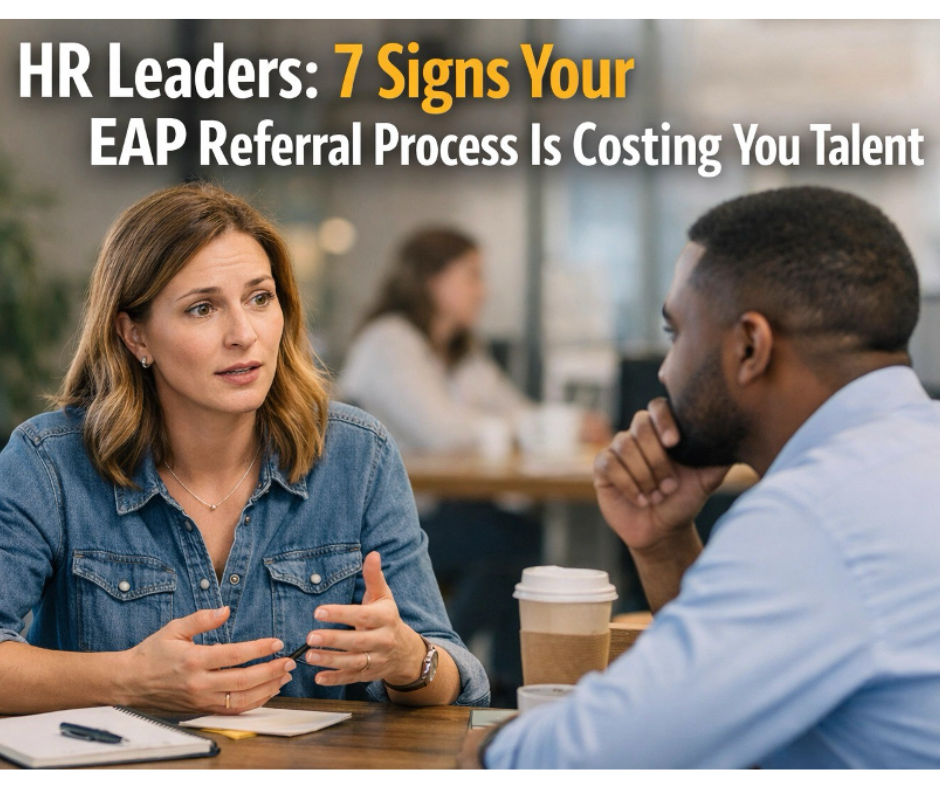
Here are the seven signs that your current EAP referral process is failing your team and costing you your best talent.
1. The “Ghosting” Phenomenon: Referrals That Never Reach Treatment
The most dangerous moment in a struggle with substance use is the gap between the “ask for help” and the “first appointment.” If your EAP involves a complicated phone tree, long hold times, or a week-long wait for a callback, the window of opportunity often slams shut.
In the world of substance abuse treatment, timing is everything. When an employee finally works up the courage to admit they need help, they are in a state of crisis. If the referral process is too difficult to navigate, they simply give up. This results in “ghosting”: the employee returns to their desk, their performance continues to slide, and eventually, you are forced to terminate a once-valuable staff member.

2. Lack of Specialized “Workforce Professional Recovery” Tracks
Does your EAP treat a high-level executive the same way they treat a part-time entry-level worker? While everyone deserves equal compassion, the professional stakes are different for someone in a leadership or safety-sensitive role.
Generic referrals to community support groups are often not enough. Workforce professionals face unique hurdles, such as the fear of professional stigma or the need to manage a high-stakes return-to-work agreement. If your EAP isn’t connecting employees with addiction treatment centers that offer specialized professional tracks: like Livengrin’s Workforce Program: the treatment may not “stick” because it doesn’t address the specific pressures of their career.
3. The “Voucher” Mentality Over Clinical Quality
Many EAPs operate on a volume-based model. They provide a “voucher” for three to five sessions with a generalist therapist who may or may not have specific expertise in addiction.
Addiction is a complex, chronic brain disease. It requires specialized clinical intervention. If your referral process focuses more on “checking a box” than on the quality of the clinical care, your employees will likely cycle through the system without finding lasting stability. At Livengrin, we meet patients where they are, providing a full continuum of care from detox and residential treatment to intensive outpatient services.
4. Poor Communication Loops with HR and Management
One of the biggest frustrations for HR leaders is the “silence” that follows a referral. You send an employee for help, and then… nothing. You don’t know if they’ve checked in, if they are compliant with treatment, or when they might be ready to return.
While patient privacy (HIPAA) is paramount, a high-quality referral partner understands the needs of the employer. There should be a structured process for “Return to Work” agreements and progress updates (with proper consents). If you are left in the dark, you cannot plan for coverage or support the employee’s reintegration, leading to administrative chaos and eventual turnover.

5. High Relapse Rates and “Revolving Door” Admissions
If you notice the same employees utilizing EAP services for the same issues every six months, your referral process is likely addressing the symptoms rather than the root cause.
Substance use disorder requires more than a few counseling sessions; it often requires a comprehensive lifestyle change and aftercare and relapse prevention strategies. If your EAP is only offering
short-term “band-aids,” the underlying issue remains. The cost of hiring and training a replacement is far higher than the cost of ensuring an employee gets the right treatment the first time.
6. The Stigma of the “Generalist” Referral
Employees are often hesitant to use EAPs because they fear their issues will be judged or that the person on the other end of the line doesn’t “get it.”
If your referral process feels cold and clinical, employees will hide their struggles until a catastrophic event occurs: a DUI, an on-the-job accident, or a total breakdown. A compassionate, transparent referral process to a trusted partner like Livengrin helps remove that stigma. When employees see that their company partners with a respected healthcare foundation, they feel safer asking for help before the crisis peaks.
7. No Support for the “Return-to-Work” Transition
The most fragile time for an employee in recovery is the first 30 days back on the job. If your EAP’s job ends the moment the employee leaves treatment, you are setting them up for failure.
A successful recovery journey requires a bridge back to the workplace. Does your process include work-site reintegration? Does it offer community support for the employee as they navigate their “new normal”? Without this, the stress of returning to a high-pressure environment can trigger a re-lapse, leading to the permanent loss of that talent.

How Livengrin Can Help You Protect Your Talent
At Livengrin, we don’t just treat patients; we partner with employers. We understand that as an HR leader, you are balancing the needs of the business with a genuine desire to help your team. Our
Workforce Professional’s Journey is designed specifically to address the nuances of employees in recovery.
Why choose Livengrin as your referral partner?
- Speed of Admissions: We know that addiction doesn’t Our admissions team works quickly to assess and place individuals into the appropriate level of care.
- Clinically Driven Care: We offer evidence-based substance abuse treatment delivered by highly qualified experts who specialize in addiction, not just general mental health.
- Dedicated Workforce Coordination: We bridge the gap between the clinical team and the HR department, ensuring that return-to-work protocols are followed and that the transition back to productivity is seamless.
- Full Spectrum of Support: From intervention services to DUI services, we provide the resources you need to manage any situation.
Stop the Talent Drain
Your employees are more than just numbers on a spreadsheet; they are the heart of your organization. When they struggle, your organization struggles. By auditing your EAP referral process and choosing a partner that prioritizes workforce professional recovery, you can save lives and protect your company’s future.
Recovery is possible, and a return to full productivity is more than just a hope: it’s a reality we see every day at Livengrin.
Next Steps for HR Leaders:
- Review your current EAP utilization and “drop-off”
- Learn more about our Workforce Program.
- Contact our team to discuss how we can provide a more compassionate, effective referral path for your employees.
Don’t wait for a crisis to realize your safety net has holes. Let’s work together to foster a culture of fostering recovery and professional excellence.
Contact Livengrin Admissions: https://livengrin.org/admissions
Explore our Treatment Options: https://livengrin.org/treatments