
If you’re asking, “is addiction a choice,” you’re likely watching someone you care about struggle with substance use. Maybe it’s your spouse, your adult child, or a colleague. The question feels urgent because if addiction is a choice, then the person should just be able to stop, right?
Here’s the straightforward answer: Addiction is not a choice. It’s a chronic brain disease.
At Livengrin Foundation, we’ve been treating addiction in the Philadelphia area for over 60 years. In that time, we’ve seen thousands of individuals and families grapple with this exact question. The science is clear, and understanding this distinction isn’t just academic: it’s the difference between effective treatment and years of frustration.
The Science Behind Addiction as a Brain Disease
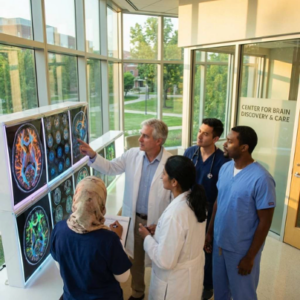 When someone first uses drugs or alcohol, that initial decision might involve choice. But addiction fundamentally changes how the brain works. Substances hijack your brain’s reward system: the same system that evolved to help humans seek food, safety, and connection.
Your brain begins treating the drug as more important than these basic survival needs. This isn’t weakness or poor judgment. It’s maladaptive learning: your brain has literally learned the wrong les-son about what it needs to survive.
Here’s what happens on a neurological level:
- Tolerance develops: The brain adapts to repeated substance use, requiring larger doses to achieve the same effect
- Physical dependence emerges: The brain’s chemistry changes so significantly that stopping caus-es withdrawal symptoms
- Cravings persist: Even after detox, environmental triggers can reignite powerful urges months or years later
This last point is crucial. Even when someone’s brain chemistry returns closer to normal after treat-ment, “addiction memory” remains. Stress, certain locations, or even specific times of day can trigger intense cravings. This is why willpower alone cannot overcome addiction: the brain’s structure has fundamentally changed.
Why the “Choice” Myth Persists (And Why It’s Harmful)
The idea that addiction is simply a matter of choice persists for understandable reasons. From the outside, it can look like someone is repeatedly choosing substances over their family, career, or health. This perspective makes sense if you don’t understand what’s happening inside the addicted brain.
The “choice” myth is also reinforced by:
- Moral frameworks: Our society often views addiction through a lens of personal responsibility and moral failing
- Visible consequences: We see the external damage: lost jobs, broken relationships, financial problems
- Intermittent control: People with addiction sometimes can stop temporarily, which seems to prove they have control
- Stigma and shame: Treating addiction as a choice allows society to distance itself from the problem
But viewing addiction as a choice is not just inaccurate: it’s actively harmful. It prevents people from seeking treatment, creates shame that worsens the condition, and leads families to use ineffective approaches like threats, ultimatums, or cutting off support entirely.
What This Means for Philadelphia Families
 Understanding addiction as a brain disease changes everything for families dealing with this challenge. Here in the Philadelphia area, where we see the daily impact of the opioid crisis and rising alcohol-related problems, this knowledge can be the difference between a family that recovers together and one that fractures under the weight of misunderstanding.
For family members, this means:
- Your loved one isn’t choosing addiction over you
- Shame and guilt are counterproductive approaches
- Professional treatment addresses the underlying brain changes
- Recovery is possible with proper support and intervention
For employers, particularly in industries like healthcare, construction, and public safety that are common in our region, this understanding helps create:
- Employee assistance programs that actually work
- Policies focused on recovery rather than punishment
- Reduced stigma that encourages people to seek help earlier
For individuals struggling with addiction, knowing this science can:
- Reduce self-blame that often fuels continued use
- Encourage engagement with evidence-based treatment
- Provide hope that recovery is medically possible
Evidence-Based Treatment That Works
Since addiction is a brain disease, effective treatment must address the neurological changes that have occurred. At Livengrin, our approach combines medical intervention with psychological and social support because addiction affects the whole person.
Modern addiction treatment in 2025 includes:
Medical interventions:
- Medically supervised detoxification to safely manage withdrawal
- Medication-assisted treatment (MAT) that helps rebalance brain chemistry
- Treatment of co-occurring mental health conditions
Behavioral therapies:
- Cognitive behavioral therapy to identify and change thought patterns
- Trauma-informed care addressing underlying psychological wounds
- Family therapy to rebuild healthy relationships and communication
Long-term support:
- Peer support groups and ongoing counseling
- Life skills training and vocational support
- Relapse prevention strategies
The key insight is that effective treatment must be individualized. Just as diabetes treatment varies between patients based on their specific condition and circumstances, addiction treatment must meet each person where they are in their recovery journey.
Frequently Asked Questions
Q: If addiction isn’t a choice, does that mean people have no responsibility for their recovery?
A: Personal responsibility plays a crucial role in recovery, but it’s different from the initial development of addiction. While someone didn’t choose to develop the brain disease of addiction, they can choose to engage with treatment and recovery support. This distinction is important: we hold people accountable for their recovery while understanding that addiction itself is not a moral failing.
Q: Why do some people seem to quit “cold turkey” on their own?
A: Some individuals do recover without formal treatment, but this represents a small percentage of people with addiction. These cases often involve less severe addiction, strong social support systems, or underlying factors that aren’t visible from the outside. The fact that some people recover independently doesn’t negate that addiction is a brain disease: it simply shows that recovery can take different forms.
Q: How do genetics factor into addiction as a brain disease?
A: Genetic factors account for roughly 50-60% of addiction risk, according to research. This means that addiction runs in families, but having a genetic predisposition doesn’t guarantee addiction will develop. Environmental factors, age of first use, and individual circumstances all interact with genetic vulnerability.
Q: What should I say to someone who insists addiction is just a choice?
A: Approach with compassion while sharing factual information. You might say, “I understand that perspective, but current neuroscience shows us that addiction changes brain structure and function in ways that make stopping incredibly difficult without proper support. This doesn’t excuse harmful behavior, but it does help us understand why effective treatment requires medical intervention.”
Q: How can employers in Philadelphia support employees struggling with addiction?
 A: Create policies that encourage treatment rather than punishment, offer employee assistance pro-grams with addiction resources, provide health insurance that covers substance abuse treatment, and train managers to recognize signs of addiction and respond appropriately. Remember that helping an employee recover is often more cost-effective than hiring and training a replacement.
Taking the Next Steps: How to Get Help
If you’re ready to move beyond the question of choice and toward solutions, here’s what we recommend:
For families:
- Educate yourselves about addiction as a medical condition
- Consider family therapy or support groups like those offered through Livengrin’s family programs
- Learn about local treatment options and insurance coverage
- Practice setting healthy boundaries while maintaining compassion
For individuals struggling with addiction:
- Reach out to a medical professional for assessment
- Don’t let shame prevent you from seeking help: addiction is a treatable medical condition
- Consider both inpatient and outpatient treatment options based on your needs
- Build a support network that understands addiction as a disease
For employers:
- Review your current policies and employee assistance programs
- Provide training for managers about addiction and mental health
- Ensure your health benefits include comprehensive addiction treatment
- Create a culture where seeking help is seen as responsible, not weak
The question “is addiction a choice” reveals our deep desire to understand and control this devastating disease. While the initial use of substances may involve choice, addiction itself is a chronic medical condition that requires compassionate, evidence-based treatment.
At Livengrin Foundation, we’ve spent six decades learning that recovery is possible when we treat addiction as the complex brain disease it truly is. If you or your family are dealing with addiction, you don’t have to navigate this alone. Professional help is available, recovery is possible, and understanding the science behind addiction is the first step toward healing.
Ready to learn more about evidence-based addiction treatment? Contact Livengrin Foundation to speak with our team about treatment options that address addiction as the medical condition it is, not the moral failing society too often believes it to be.