
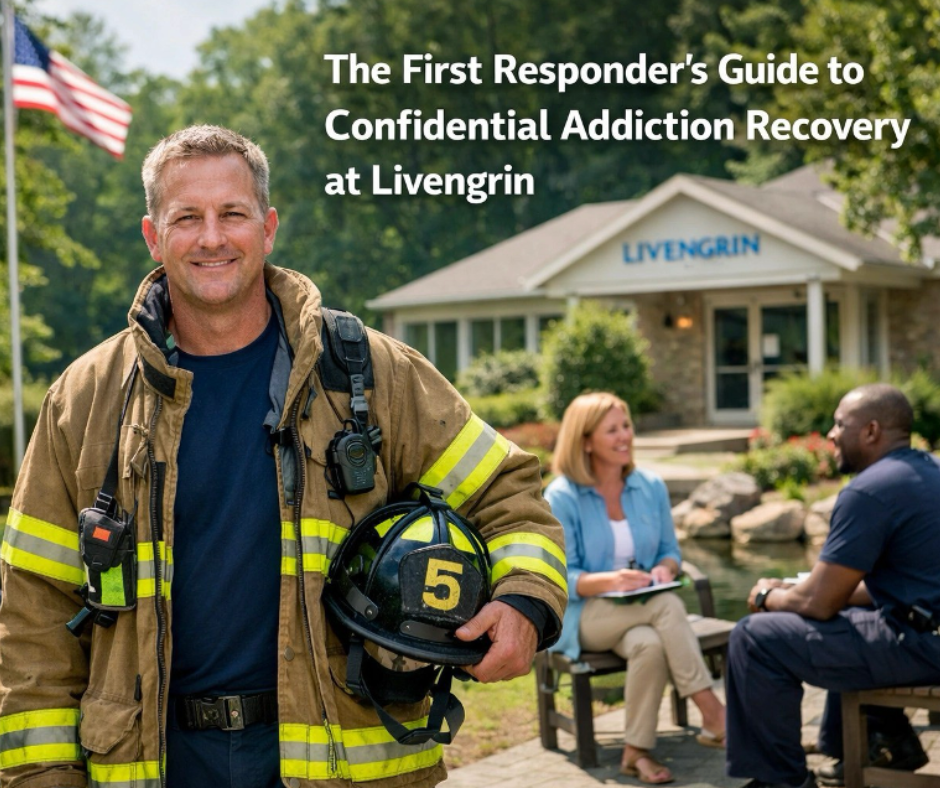
You spend your shifts running toward the things everyone else is running away from. Whether you’re a police officer, a firefighter, an EMT, or a veteran, your “normal day at the office” involves high-stakes decisions, adrenaline spikes, and witnessing things that most people only see in movies: and usually wish they hadn’t.
At Livengrin Foundation, Inc., we’ve been standing on the front lines of recovery since 1966. For nearly 60 years, we’ve served as a sanctuary for those who serve others. We’ve seen the landscape of sub-stance abuse treatment change, but one thing remains constant: the weight of the badge (or the uniform) shouldn’t be the thing that keeps you from getting help.
If you’re worried that admitting you’re struggling with alcohol or drugs means handing over your career, we need to talk. Recovery isn’t a sign of weakness; it’s a tactical decision to ensure you stay in the fight for the long haul.
Why First Responders Need a Different Kind of Help
Standard addiction treatment centers often miss the mark when it comes to the culture of emergency services. You don’t necessarily want to sit in a general group session and talk about your “feelings” with a civilian who thinks a “stressful day” is their Wi-Fi going down during a Zoom call.
First responders deal with cumulative stress: a slow-burn trauma that builds up over years of service. This isn’t just about one “bad call”; it’s about the hundreds of calls that stack up like bricks on your chest. Eventually, it becomes hard to breathe, and that’s often when substances like alcohol or pre-scription meds start looking like a viable survival strategy.
We recognize that your needs are unique. That’s why we developed the First Responders Addiction Treatment (FRAT) Program. It’s built on the understanding that the stigma of seeking help is real, but the danger of staying silent is worse.
Privacy: Will I Lose My Badge?
This is the number one question we hear, and it’s the primary reason many first responders wait until they hit a catastrophic breaking point before calling us.
Let’s be clear: Livengrin prioritizes your confidentiality with the same intensity you prioritize public safety. We understand the professional stakes. Our workforce program is designed to help you navi-gate the complexities of your career while you focus on your health.
Seeking treatment is a proactive step toward maintaining your fitness for duty. In many cases, it is the refusal to seek help: and the subsequent incidents that occur because of untreated addiction: that puts a badge at risk. At Livengrin, we offer a safe, confidential environment where you can drop the “invincible” persona and just be a human being for a while.

The FRAT Program: Peer Support That Actually Works
One of the cornerstones of the FRAT program is the concept that “only another responder gets it.” You speak a specific language, you have a specific humor (often a bit dark, which we totally appreciate), and you have a shared set of values.
In our FRAT program, you aren’t just another patient; you’re part of a specialized unit. We leverage peer support networks because isolation is the fuel that keeps addiction burning.
The Wingman and the BOOTs
We don’t leave people behind. Each patient in the FRAT program is assigned a “Wingman”: a peer mentor who has been through the program and knows exactly what the first few days feel like.
Additionally, we have the “BOOTs” (Experienced Patients). These are individuals who are further along in their journey and share their success stories and the challenges of early sobriety. This isn’t just theory; it’s practical, lived experience from people who have sat in your seat.
Group Therapy Without the Cringe
Group therapy in the FRAT program isn’t about holding hands and singing. It’s about creating a supportive environment where you can bond over shared service experiences. It’s about finding solutions to “living problems”: the day-to-day stressors that trigger the urge to use.
Evidence-Based Science Meets Front-Line Reality
Compassion is our brand, but science is our backbone. We don’t just hope you get better; we use proven clinical methods to make sure you do. Our addiction treatment centers employ a range of evidence-based therapies tailored to the responder mindset:
- Cognitive Behavioral Therapy (CBT): Helping you identify the thought patterns that lead to sub-stance use.
- Trauma-Focused CBT & Cognitive Processing Therapy (CPT): Because you can’t treat the addiction without addressing the trauma that often drives it.
- Acceptance and Commitment Therapy (ACT): Teaching you to stop fighting the things you can’t control and focus on your values.
- Motivational Enhancement Therapy (MET): Finding that internal drive to change, even when you’re feeling burned out.
We also provide daily psychoeducation. These aren’t boring lectures; they are deep dives into the mechanics of addiction and the “living problems” that first responders face, delivered by professionals who understand what front-line stress really looks like.

60 Years of Experience: Why it Matters
Livengrin isn’t a “pop-up” rehab. We’ve been a staple of the Pennsylvania healthcare community for nearly six decades. That longevity means we’ve seen it all, and we’ve refined our approach to meet patients where they are.
We know that no two paths to recovery look the same. For one person, it might be a stay in our residential program; for another, it might be our outpatient services that allow them to continue managing their lives while they heal. We aren’t here to force you into a box; we’re here to build a plan that works for you.
Taking the First Step (Without Falling Over)
We know that picking up the phone is the hardest part. It feels like a surrender. But in reality, it’s a tactical regrouping. You’ve spent your life being the one who helps. Now, it’s your turn to be the one who gets helped.
Livengrin offers a compassionate community where your dignity is preserved, and your service is respected. Whether you are looking for intervention services for a colleague or you’ve finally decided that enough is enough for yourself, we are ready to take your call.
How to Get Started:
- Call us at 215-638-5200. You’ll talk to someone who understands the first responder culture and the need for discretion.
- Assessment: We’ll look at what’s going on and figure out the best level of care: whether that’s FRAT, detox, or outpatient support.
- The Journey: You’ll enter a program where you are surrounded by peers and professionals who have your back.
Recovery is possible. Your career isn’t over; it’s just getting a much-needed maintenance check. You don’t have to do this alone: let us be your wingman.
Livengrin Foundation, Inc. 60 Years of Hope and Healing. Contact Us Today | 215-638-5200