
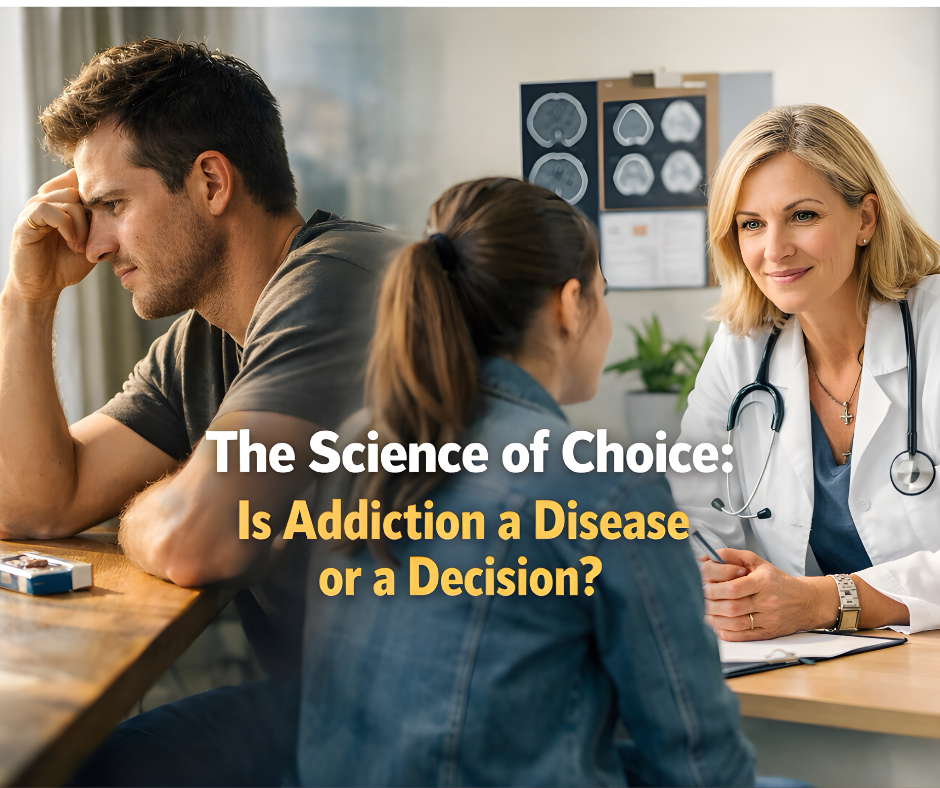
For over 60 years, the Livengrin Foundation has stood at the front lines of addiction treatment in the Philadelphia region and beyond. Since 1966, we have walked alongside thousands of individuals and families navigating the painful, often confusing landscape of substance use disorders. In those six decades, the most common question we hear, from parents, spouses, and even those struggling themselves, is a fundamental one: “Is addiction a disease or a choice?”
It is a question rooted in both a search for understanding and a need for accountability. If it’s a choice, then why can’t they just stop? If it’s a disease, does that mean they are powerless forever?
At Livengrin, our clinical authority is built on decades of evidence-based practice and a deep well of compassion. We believe that understanding the science behind this debate is the first step toward healing. Let’s dive into the complexities of the human brain, the reality of “choice,” and why the medical community identifies addiction as a chronic brain disease.
Understanding the “Choice” Argument
The argument that addiction is a choice usually centers on the beginning of the journey. Unlike a diagnosis of cancer or a sudden heart attack, the first time someone uses a substance, it is typically a voluntary action.
Critics of the disease model often point to this initial decision-making process. They argue that be-cause an individual chooses to pick up a drink or a drug, the subsequent consequences are a matter of personal responsibility and willpower. This perspective focuses on “agency”, the idea that humans have the capacity to act independently and make free choices.
However, viewing addiction purely through the lens of choice ignores what happens after that first use. It fails to account for how a substance chemically hijacks the brain’s survival mechanisms. At Livengrin, we recognize that addiction can happen to anyone, regardless of their initial intentions or strength of character.

The Science of the “Disease” Model
The medical community, including the National Institutes of Health (NIH) and the American Society of Addiction Medicine (ASAM), classifies addiction as a chronic, relapsing brain disease. This isn’t a “soft” definition designed to excuse behavior; it is a clinical reality based on observable changes in the brain’s structure and function.
1. Neurobiological Hijacking
When a person uses a substance, the brain’s reward system is flooded with dopamine, a neurotransmitter associated with pleasure and survival. While natural rewards like food or exercise produce a healthy surge of dopamine, drugs and alcohol provide a massive, artificial spike.
Over time, the brain tries to adapt by downregulating its own dopamine production. This means that things that used to bring you joy no longer do. The brain begins to prioritize the substance over everything else, food, sleep, and even family, because it has been “reprogrammed” to believe the substance is essential for survival.
2. Impaired Decision-Making
The prefrontal cortex is the part of the brain responsible for impulse control, weighing consequences, and making rational decisions. Chronic substance use physically weakens the neural pathways in this area.
When people ask, “Why don’t they just stop?”, they are assuming the person has a fully functioning prefrontal cortex. In reality, the “brakes” of the brain have been cut. The individual isn’t making a logical choice; they are reacting to a physiological compulsion that has overridden their executive function.
3. Genetic Vulnerability
Science shows us that genetics account for about 40% to 60% of a person’s vulnerability to addiction. Just as some people are genetically predisposed to heart disease or diabetes, some individuals are born with a brain chemistry that is more susceptible to the “hook” of a substance. At Livengrin, we meet patients where they are, recognizing that no two paths to addiction, or recovery, look the same.
The “Choice” vs. “Disease” Hybrid: A Chronic Condition
A helpful way to bridge this debate is to compare addiction to other chronic lifestyle-related diseases, such as Type II Diabetes or hypertension.
- The Choice: A person might choose a diet high in sugar or lead a sedentary lifestyle, which in-creases their risk for diabetes.
- The Disease: Once the body loses its ability to regulate insulin, the person has a medical They cannot simply “will” their blood sugar to be normal. They require medical intervention, lifestyle changes, and ongoing management.
Addiction follows this same pattern. While the initial use may have been a choice, the resulting sub-stance use disorder is a medical condition that requires a professional, multi-faceted approach to treat. At our addiction treatment centers, we treat the person, not just the symptoms, acknowledging both the biological realities and the behavioral changes needed for long-term sobriety.

Why the Label Matters
You might wonder why we fight so hard to classify addiction as a disease. Is it just about semantics? No. The way we define addiction directly impacts how we treat it and how society perceives those who are suffering.
- Removing the Stigma: When addiction is viewed as a moral failing or a lack of willpower, it breeds shame. Shame keeps people in the shadows and prevents them from seeking help. When we recognize it as a disease, we approach it with the same urgency and compassion we would any other health crisis.
- Access to Medical Care: Defining addiction as a disease ensures that it is covered by insurance and treated by qualified medical professionals, including the dedicated Livengrin nurses who pro-vide a lifeline to those in detox.
- Long-Term Management: If addiction is a “choice,” the solution is simply to “choose better.” But if it’s a chronic disease, we know that recovery is a lifelong This is why we place such high value on our alumni meetings and community support; the brain needs time and consistent care to heal.
Livengrin’s 60 Years of Clinical Authority
With six decades of experience, the Livengrin Foundation has seen the evolution of addiction science firsthand. We don’t just read the research; we live it every day. Our approach is grounded in clinical excellence but delivered with a compassionate community spirit.
We understand that recovery is not a matter of “just saying no.” It is a matter of rebuilding a life. Our programs are designed to:
- Stabilize the brain through medically monitored
- Address the underlying trauma or mental health issues that often drive substance
- Provide the tools and coping mechanisms needed to navigate a world where the “choice” to re-main sober must be made every single day.
Whether you are looking for information on opioid addiction or seeking help for a loved one, our staff: ranging from board-certified physicians to compassionate counselors: is here to guide you with dignity and respect.

Moving Forward: From Debate to Action
So, is addiction a disease or a choice?
The most accurate answer is that it begins with a choice but culminates in a chronic brain disease. Continuing to argue about the label while lives are being lost is a distraction we cannot afford. In the Philadelphia region, where we have seen the devastating impact of the opioid crisis, the focus must remain on effective, compassionate treatment.
If you or someone you love is struggling, don’t wait for “willpower” to kick in. Willpower is a finite re-source, but recovery is a collective effort. At Livengrin, we act as your partner in this journey, offering the expertise of a 60-year legacy and the heart of a community that truly cares.
Take the Next Step
Recovery is possible, and it starts with a single phone call. You don’t have to navigate this complex science alone.
- Explore our resources: Read more on our blog about how we ar educating the public’s percep-tion of addiction.
- Join a community: Our alumni meetings are open to those looking for ongoing
- Get help now: Visit our website to learn more about our programs or to speak with an admissions
Your journey to healing starts here. At Livengrin, we meet you where you are, and we help you get to where you want to be.